



The 2026 Hyundai Santa Fe continues to be one of the most compelling three-row SUVs on the market. With bold styling, a well-appointed interior, and a wide range of trims from family-friendly to fully loaded. If you’ve been researching the Hyundai Santa Fe price in the Tri-Cities, WA, here’s your complete guide. Below is every 2026 Santa Fe trim, its starting MSRP, and what makes each one stand out so you can walk into our Hyundai Santa Fe dealership ready to find the right one.
What’s New for the 2026 Hyundai Santa Fe?
The 2026 Santa Fe is a carryover following its 2024 redesign, but Hyundai added meaningful updates across the lineup. The SEL and XRT now include third-row USB ports. The Limited gains standard second-row captain’s chairs and dual wireless charging pads. The Calligraphy adds a new Pecan Brown Nappa leather interior option. And the XRT now comes equipped with Terrain Mode including Mud, Snow, and Sand settings for improved off-road traction. Every gas Santa Fe also gets a smoother, traditional 8-speed torque converter automatic transmission replacing the previous dual-clutch unit.
New 2026 Hyundai Santa Fe SE Base: Starting MSRP $36,650 (FWD) · $38,450 (AWD)
- FWD standard
- AWD available
- Up to 7 passengers
A well-equipped entry point. The SE includes 18-inch alloy wheels, a 12.3″ touchscreen with wireless Apple CarPlay and Android Auto, LED exterior lighting, a hands-free power liftgate, keyless entry and start, and Hyundai SmartSense safety suite as standard. Fabric seating with a second-row bench for up to 7 passengers.
New 2026 Hyundai Santa Fe SEL Best Value: Starting MSRP ~$37,000 (FWD) · ~$38,800 (AWD)
- FWD standard
- AWD available
- Popular family choice
The sweet spot for most Santa Fe buyers. The SEL adds heated front seats, H-Tex faux-leather seating, a power-adjustable driver’s seat, rear-zone climate control, third-row USB ports, and a panoramic curved display that blends the infotainment and gauge cluster. The best balance of features and price in the gas lineup.
New 2026 Hyundai Santa FE XRT Off-Road: Starting MSRP ~$40,000 (AWD)
- AWD standard
- Up to 4,500 lbs towing
- Terrain Mode
The rugged member of the Santa Fe family. The XRT adds all-terrain styling with dark exterior accents, higher ground clearance, Terrain Mode (Mud, Snow, Sand), third-row USB ports, and the highest towing capacity in the lineup at 4,500 lbs. AWD is standard. Note: the XRT is a gas-only trim and not available as a hybrid.
New 2026 Hyundai Santa Fe Limited: Starting MSRP ~$45,750 (FWD) · ~$47,550 (AWD)
- FWD or AWD
- Second-row captain’s chairs standard
- Premium tech
The Limited delivers a genuine luxury experience. Standard features include leather seating, ventilated front seats, second-row captain’s chairs, dual wireless charging pads, a surround-view camera, a head-up display, Blind-Spot View Monitor in the instrument cluster, and a Bose® 12-speaker premium sound system. One of the best-equipped family SUVs at this price point.
New 2026 Hyundai Santa Fe Calligraphy Flagship: Starting MSRP $49,200 (FWD) · ~$51,000 (AWD)
- FWD or AWD
- Nappa leather
- Full luxury package
The flagship of the gas Santa Fe lineup. The Calligraphy adds Nappa leather seating (now available in Pecan Brown), upgraded premium front seats, exclusive exterior design details, and every available comfort and technology feature. If you want the absolute best the Santa Fe has to offer in a gas model, this is it.
Come see the 2026 Santa Fe at your Tri-Cities Hyundai Santa Fe dealer.
We carry gas and hybrid Santa Fe’s in multiple trims. Our team can walk you through every option and current Hyundai offers. Stop by or browse our inventory online to find the right Santa Fe at the right Hyundai Santa Fe price for your budget.
The information provided is for general informational purposes only and does not constitute legal, financial, or professional advice. While we strive to provide accurate and up-to-date information, we make no guarantees regarding the completeness, accuracy, or reliability of the information presented. Any action you take based on the context of this blog is strictly at your own risk. Always consult a qualified professional or specialist for advice specific to your situation. We are not responsible for any losses or damages arising from the use of this blog or its content.

The all-new 2026 Hyundai Palisade marks the start of its second generation — bigger, better equipped, and now available with a hybrid powertrain for the first time. If you’ve been searching for the Hyundai Palisade price in the Tri-Cities, WA, here’s everything you need to know. Below is a complete breakdown of every 2026 Palisade trim, starting MSRP, and key highlights so you can walk into our Hyundai Palisade dealership already knowing exactly what to expect.
What’s New for the 2026 Hyundai Palisade?
The 2026 Palisade arrives completely redesigned with a longer wheelbase, bolder exterior styling, a more refined interior, and a brand-new hybrid option. New standard features include ten airbags, an integrated front and rear dash cam, third-row seatbelt pre-tensioners, and available Relaxation seating in the first and second rows. It’s the most capable and well-equipped Palisade ever — at a starting 2026 Hyundai Palisade MSRP that still undercuts most luxury three-row competitors.
Gas Models: 3.5L V6 · 287 HP · 8-Speed Automatic
2026 Hyundai Palisade SE Base: Starting MSRP From $38,935 (FWD) · $40,935 (AWD)
- FWD standard
- AWD available
- 8-passenger seating
The most affordable entry into the 2026 Palisade lineup. The SE comes well-equipped with 18-inch alloy wheels, a 5,000 lb towing capacity, Hyundai SmartSense safety suite, wireless Apple CarPlay and Android Auto, and 8-passenger seating with a second-row bench. A strong value for large families.
2026 Hyundai Palisade SEL: Starting MSRP $41,440 (FWD)
- FWD standard
- AWD available
- 7 or 8 passenger
Steps up with additional comfort and convenience features, available in 7 or 8 passenger configurations. Adds heated front seats, a power driver’s seat, proximity key with push-button start, and additional tech upgrades over the SE.
New 2026 Hyundai Palisade SEL Convenience: Starting MSRP $44,365 (FWD)
- FWD standard
- AWD available
Builds on the SEL with additional convenience technology including a surround-view monitor, Blind-Spot View Monitor in the instrument cluster, power-folding third-row seats, and additional driver-assist features that make everyday driving easier for families.
New 2026 Hyundai SEL Premium Best Value: Starting MSRP $46,295 (FWD)
- FWD standard
- AWD available
- Premium comfort upgrades
The sweet spot of the gas lineup. The SEL Premium adds ventilated second-row seats, a Bose® premium sound system, a panorama sunroof without the flagship price tag.
New 2026 Hyundai Palisade Limited: Starting MSRP $50,765 (AWD)
- AWD standard
- Semi-aniline leather
- Full luxury package
The Limited brings a full premium interior experience including semi-aniline leather seating, Relaxation seating in the first and second rows, a head-up display, Highway Driving Assist 2, Digital Key 2 Premium, and a factory-installed tow hitch. AWD is standard on this trim.
New 2026 Hyundai Palisade XRT Pro Off-Road: Starting MSRP $50,865 (AWD)
- AWD standard
- All-terrain tires
- Bold rugged styling
The XRT Pro is the adventure-ready member of the Palisade family with all-terrain tires, dark exterior accents, skid plates, and enhanced off-road hardware that sets it apart from the rest of the lineup. If you want a Palisade that can handle Eastern Washington’s varied terrain, this is it.
New 2026 Hyundai Palisade Calligraphy Flagship: Starting MSRP $55,555 (AWD)
- AWD standard
- Top of the gas lineup
- Full luxury
The Calligraphy is the flagship of the gas Palisade lineup with every available comfort, safety, and technology feature included. Quilted leather seating, Relaxation seating, a digital rearview mirror, Highway Driving Assist 2, ambient lighting, and the full Bose® audio system. If you want the best, this is it.
Hybrid Models: 2.5L Turbo Hybrid · 329 HP · Up to 34 MPG
New for 2026, the Palisade Hybrid pairs a 2.5L turbocharged engine with an electric motor for up to 329 horsepower and an estimated 34 MPG combined, a significant efficiency boost over the V6 without sacrificing power.
New 2026 Hyundai Palisade Blue SEL Hybrid Entry: Starting MSRP $45,155 (FWD)
The most affordable way into the Palisade Hybrid. Combines the SEL feature set with the new turbocharged hybrid powertrain. AWD is available, and the estimated 600+ mile driving range makes it one of the most practical three-row SUVs for long Tri-Cities commutes or road trips.
New 2026 Hyundai Palisade SEL Hybrid: Starting MSRP $47,155 (FWD)
Steps up with additional features over the Blue SEL while maintaining the hybrid efficiency advantage. AWD available for added all-weather confidence across Eastern Washington roads.
New 2026 Hyundai Palisade Blue SEL Premium Hybrid: Starting MSRP $48,515 (FWD)
Brings premium comfort features like ventilated seating, Bose® audio, and panoramic sunroof. Together with hybrid fuel savings. One of the best all-around configurations in the 2026 lineup for buyers who want efficiency and luxury in the same package.
New 2026 Hyundai Palisade SEL Premium Hybrid: Starting MSRP $50,515 (FWD)
Full SEL Premium content with the hybrid powertrain. A compelling option for Tri-Cities commuters who want maximum comfort for daily highway driving and strong fuel savings over time.
New 2026 Hyundai Palisade Limited Hybrid: Starting MSRP $52,985 (AWD)
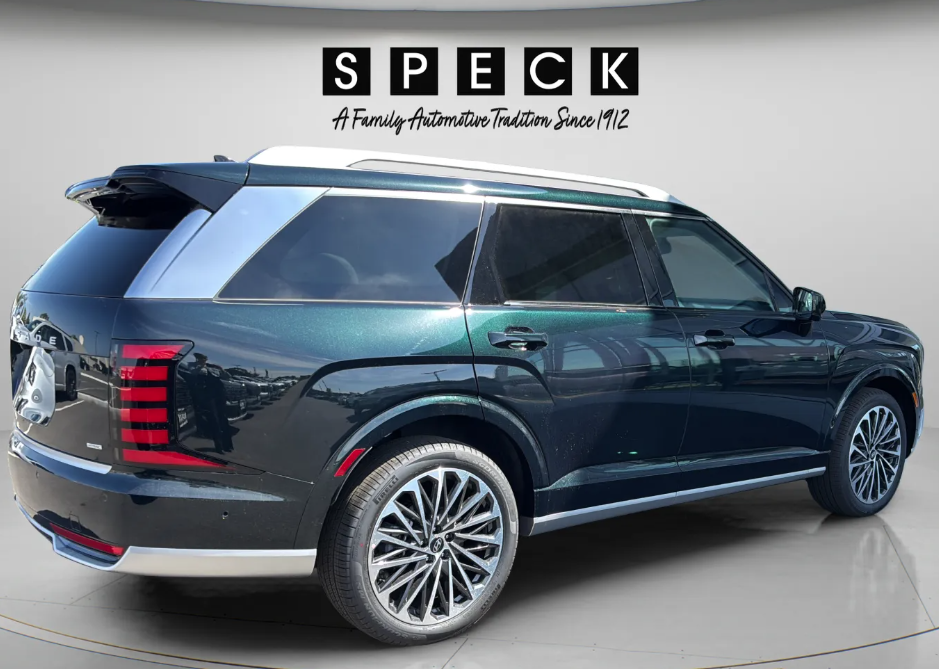
AWD standard. Full Limited luxury package — Relaxation seating, HDA2, premium tech — paired with the hybrid powertrain. One of the most complete family SUV packages available at this price point.
New 2026 Hyundai Palisade Calligraphy Hybrid Top of Lineup: Starting MSRP $57,775 (AWD)
The ultimate 2026 Palisade,flagship luxury combined with hybrid efficiency. Every premium feature available, AWD standard, and the peace of mind that comes with Hyundai’s industry-leading warranty coverage.
*All MSRPs exclude destination charge ($1,595), taxes, title, and license fees. AWD pricing adds approximately $2,000 on select FWD trims. Contact our dealership for exact in-stock pricing and current Hyundai offers.
Ready to see the 2026 Hyundai Palisade in person?
As your local Hyundai Palisade dealer in the Tri-Cities, we carry new Palisade inventory across multiple trims and can walk you through every option including current lease and finance offers. Stop by or browse our inventory online to see what’s available now.
The information provided is for general informational purposes only and does not constitute legal, financial, or professional advice. While we strive to provide accurate and up-to-date information, we make no guarantees regarding the completeness, accuracy, or reliability of the information presented. Any action you take based on the context of this blog is strictly at your own risk. Always consult a qualified professional or specialist for advice specific to your situation. We are not responsible for any losses or damages arising from the use of this blog or its content.
When you’re shopping for a new or used vehicle, reputation matters. Anyone can say they have great customer service, but reviews from real buyers tell the real story. As the top rated Hyundai dealer in the Tri-Cities, WA, we’re proud of what our customers say about their experience with us, and we work every day to earn that standing. Here’s a look at what sets us apart.
Almost a 5-Star Rating on Google
Our Google reviews speak for themselves. We’ve built a reputation across Kennewick, Richland, Pasco, and the surrounding area for honest pricing, knowledgeable staff, and a buying experience that doesn’t feel like a battle. Our customers consistently highlight our low-pressure approach, transparent communication, and a team that genuinely listens and it shows in our near 5-star Google rating.
⭐⭐⭐⭐⭐
Nearly 5 Stars on Google
Rated by hundreds of real Tri-Cities customers from Kennewick, Richland, Pasco and beyond.
In a region with several dealership options, maintaining a near-perfect Hyundai dealer review rating takes consistent effort from every member of our team — from the first handshake on the lot to the moment you drive away. We don’t take that trust lightly.
CARFAX Top Rated Dealer 3 Years in a Row
Google reviews aren’t the only place where our reputation has been recognized. We’re proud to have earned the CARFAX Top Rated Dealer distinction for three consecutive years. This award is based entirely on verified customer reviews submitted through CARFAX, one of the most trusted names in the automotive industry and is only given to dealerships that consistently deliver exceptional experiences.

CARFAX Top Rated Dealer
Awarded 3 years in a row based on verified customer reviews. CARFAX Top Rated status is earned — not purchased — and reflects the real experiences of real buyers in the Tri-Cities area.
Earning this recognition once is meaningful. Earning it three years in a row reflects something deeper — a genuine commitment to doing right by every customer who walks through our doors, whether they’re buying their first car or their fifth.
How to Leave Us a Google Review
Had a great experience with us? We’d love to hear about it. Hyundai dealer reviews from real customers help other Tri-Cities buyers make confident decisions — and they mean a great deal to our team. Leaving a Google review takes less than two minutes:
- Search “Tri-Cities Hyundai” on Google, or navigate directly to our Google Business listing.
- Click the “Write a Review” button on our Google listing. You’ll need to be signed into a Google account.
- Select your star rating and share a few words about your experience including what you bought, who helped you, and what stood out.
- Click “Post” and you’re done. Your review helps other shoppers in Kennewick, Richland, and Pasco find a dealership they can trust.
Your feedback shapes who we are.
Every Hyundai dealer Tri-Cities WA review we receive, whether it’s a compliment or a suggestion it helps us get better. We read every one, and we take them seriously. If your experience with us ever falls short of five stars, we want to know about that too.
Whether you’re just beginning your vehicle search or already ready to buy today, we invite you to experience the difference at the top rated Hyundai dealership in the Tri-Cities. In the meantime, feel free to stop by, browse our inventory online, or read through our reviews. Either way, see for yourself why so many Kennewick, Richland, and Pasco drivers keep coming back and keep choosing us time after time.
The information provided is for general informational purposes only and does not constitute legal, financial, or professional advice. While we strive to provide accurate and up-to-date information, we make no guarantees regarding the completeness, accuracy, or reliability of the information presented. Any action you take based on the context of this blog is strictly at your own risk. Always consult a qualified professional or specialist for advice specific to your situation. We are not responsible for any losses or damages arising from the use of this blog or its content.
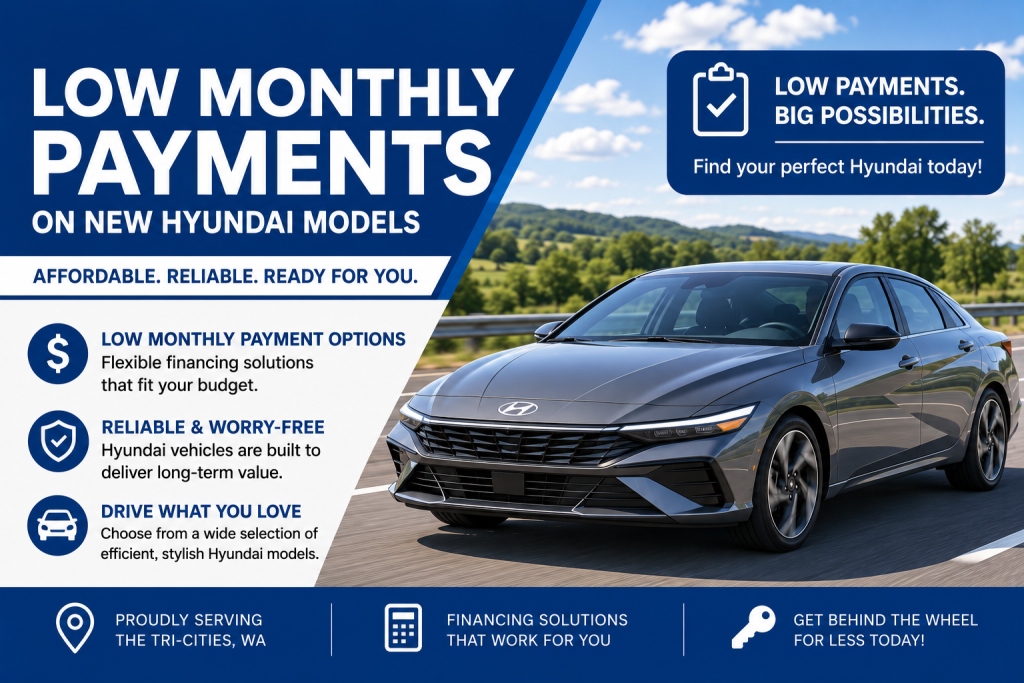
Getting into a new Hyundai doesn’t have to mean a high monthly payment. At our Hyundai dealership in the Tri-Cities, there are several straightforward ways to lower what you pay each month, whether you’re financing, leasing, or starting from a lower-priced model. Here’s a practical guide to getting the most car for your budget.
Common Ways to Lower Your Monthly Payment on a Hyundai
- Trade In Your Current Vehicle: One of the most effective ways to lower your monthly payment is to apply your trade-in value toward your new vehicle. Your trade reduces the amount you’re financing, which directly lowers your payment. Even an older, higher-mileage vehicle can have meaningful trade-in value and our team will give you a straightforward appraisal. Every dollar of trade equity is a dollar less you’re borrowing.
- Put Money Down: A down payment works the same way as a trade-in. It reduces the amount financed and brings your monthly payment down. Even a modest down payment of $1,000–$2,000 can make a noticeable difference in your monthly commitment, especially when combined with a competitive Hyundai dealer financing rate. More down simply means less to pay back each month.
- Consider Leasing: Leases almost always carry a lower monthly payment than financing the same vehicle. That’s because with a lease, you’re only paying for the portion of the vehicle’s value you use during the lease term, not the full purchase price. Hyundai low payment deals are frequently available as lease specials, and they’re updated monthly. If keeping your payment as low as possible is the priority and you like to upgrade every few years, leasing is worth a serious look.
- Start with a Lower MSRP Model: The simplest way to get a lower payment? Choose a vehicle with a lower starting price. Hyundai’s lineup includes some of the most affordable new vehicles in the segment, and they don’t sacrifice quality to get there. A lower starting MSRP means a lower amount to finance or lease and a lower payment right from the start.
Hyundai Models with the Lowest Starting MSRPs
If a cheap monthly payment on a Hyundai is the goal, these models are the best starting points. Lower MSRP means lower monthly payments. Simple as that!
New 2026 Hyundai Elantra: Starting MSRP $22,000
One of the most affordable new cars on the market with a stylish interior, great fuel economy, and standard tech features that rivals charge extra for.
New 2026 Hyundai Kona: Starting MSRP $25,500
The most affordable Hyundai SUV. Great for commuters who want a compact crossover with standard SmartSense safety tech at a payment-friendly price.
New 2026 Hyundai Venue: Starting MSRP $20,250
Hyundai’s most affordable model. Small but smart with a 8″ touchscreen, Apple CarPlay, and standard safety features at one of the lowest payments in the segment.
New 2026 Hyundai Tucson: Starting MSRP $30,450
A step up in size with a strong value proposition. Frequently featured in Hyundai low payment deals as a lease or finance special each month.
Hyundai Leasing Tip
Hyundai dealer financing and lease offers change every month. The Elantra, Kona, and Venue are frequently featured in monthly specials with some of the lowest payments in the Hyundai lineup. Check our current Hyundai offers online or stop by to see what’s available right now.

Estimate Your Payment Online Before You Come In
Not sure what your monthly payment might look like? You don’t have to wait until you’re sitting at a desk. On our website, every vehicle listing includes a “Personalize Your Deal” button that lets you build your own payment estimate right from your phone or computer. You can enter your trade-in information, adjust your down payment, choose between financing and leasing, and see how each variable changes your monthly number in real time.
It’s a great way to explore your options, set a realistic budget, and walk in feeling confident and prepared. Our Hyundai dealership team is always here to answer questions and fine-tune the numbers, but the “Personalize Your Deal” tool gives you a strong starting point on your own terms.
Ready to find your Hyundai low payment deal in the Tri-Cities? Browse our current inventory, use the payment estimator on any vehicle listing, and stop by when you’re ready. Our finance team will work hard to get you into the right Hyundai at a payment that works for your budget.
The information provided is for general informational purposes only and does not constitute legal, financial, or professional advice. While we strive to provide accurate and up-to-date information, we make no guarantees regarding the completeness, accuracy, or reliability of the information presented. Any action you take based on the context of this blog is strictly at your own risk. Always consult a qualified professional or specialist for advice specific to your situation. We are not responsible for any losses or damages arising from the use of this blog or its content.

If you work at Hanford, you know the daily drive adds up fast. Fuel costs and highway comfort matter more than most people think. The right vehicle makes a real difference — at the pump and on arrival. Hyundai’s SUV lineup is built with commuters in mind. It offers some of the best Hyundai fuel economy numbers in the segment. Options range from gas and hybrid to plug-in hybrid and fully electric. Here’s a breakdown of the top picks for each powertrain.
How Far Is the Commute? Tri-Cities to Hanford
Thousands of Tri-Cities residents make the daily drive to the Hanford Site. Depending on where you live, that commute can range from manageable to meaningful and those miles compound quickly over a work week and a year.
| Starting City | Approx. Miles to Hanford (One Way) | Daily Round Trip | Annual Miles (250 work days) |
|---|---|---|---|
| Richland | ~35 miles | ~70 miles/day | ~17,500 miles/year |
| Kennewick | ~45 miles | ~90 miles/day | ~22,500 miles/year |
| Pasco | ~50 miles | ~100 miles/day | ~25,000 miles/year |
*Distances are approximate and may vary based on specific work location within the Hanford Site and route taken.
At those annual mileage totals, Hyundai SUV fuel economy and drivetrain efficiency aren’t just nice-to-haves, they translate directly into hundreds or thousands of dollars saved every year.
Best Hyundai SUVs by Powertrain for Highway Commuting
Top 2 Gas Models: Best Hyundai SUV Fuel Economy
Tucson #1 Gas: Up to 38 MPG Combined
The Tucson leads the gas-only lineup with up to 38 MPG combined, making it the most fuel-efficient non-electrified Hyundai SUV for highway commuting. Its 2.5L four-cylinder is smooth and refined, and the spacious cabin with available heated seats and dual-zone climate control makes even a 90-minute daily commute comfortable.
Kona #2 Gas: Up to 33 MPG Combined
The Kona punches above its compact size with up to 33 MPG combined, one of the best ratings in the small SUV segment. It’s an ideal choice for solo commuters who want maximum fuel savings in a nimble, easy-to-drive package with modern tech and standard safety features.
Top 2 Hybrid Models: Best Hyundai Hybrid for Commuting
Tucson Hybrid #1 Hybrid: 38 MPG Combined
The Tucson Hybrid delivers an impressive 38 MPG combined, nearly double what a conventional midsize SUV achieves, with AWD available for added confidence in Eastern Washington’s variable weather. For Hanford commuters logging 22,000+ miles a year, the fuel savings over a conventional SUV are significant and add up quickly.
Santa Fe Hybrid #2 Hybrid: 35–36 MPG Combined
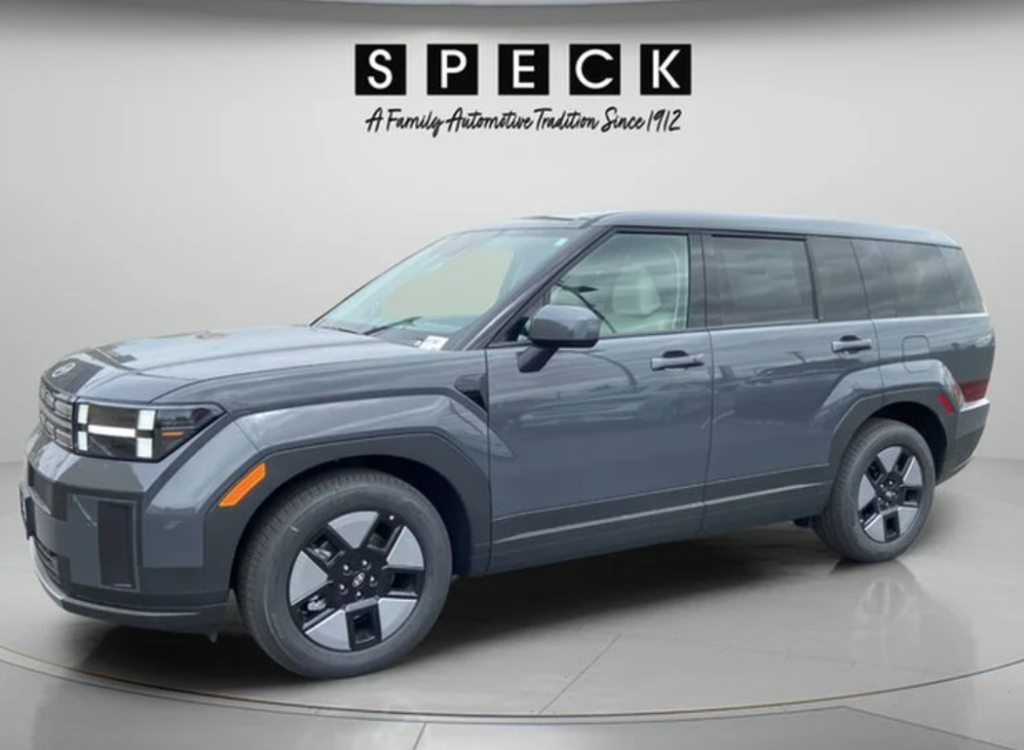
The Santa Fe Hybrid steps up in size and comfort while still delivering an excellent 35–36 MPG combined. It’s the choice for commuters who want more space, a more premium interior, and the ability to carry passengers or cargo on the drive home without sacrificing efficiency. Standard AWD on all trims adds peace of mind.
Top 2 Plug-In Hybrid Models: Best Hyundai PHEV
Tucson PHEV #1 PHEV: 77 MPGe · 32 mi electric range
The Tucson PHEV is a standout option for Richland-area commuters. With 32 miles of all-electric range, a Richland-to-Hanford commuter could potentially complete a significant portion of their daily drive on electricity alone with the gas engine ready to seamlessly kick in for longer days. When running on gas after the battery depletes, it still returns 35 MPG combined.
Santa Fe PHEV #2 PHEV: 34 mi electric range · AWD standard
The Santa Fe PHEV offers about 34 miles of electric range with AWD standard, a compelling package for commuters who want a larger, more capable SUV while still taking advantage of at-home charging. If you can charge at work or at home, your daily fuel cost can drop dramatically.
Top 2 Electric Models: Best Hyundai Electric SUV for Commuting
IONIQ 6 #1 Electric: Up to 342 miles range · 151 MPGe city
Technically a sedan-style crossover, the IONIQ 6 is the most efficient Hyundai electric vehicle for highway commuting — with an EPA-estimated range of up to 342 miles (RWD) and one of the highest MPGe ratings of any EV on the market. Its 800-volt architecture means it can charge from 10–80% in as little as 18 minutes at a DC fast charger. For a Pasco commuter driving 100 miles a day, the IONIQ 6 handles a full day on a single charge with range to spare.
IONIQ 5 #2 Electric: Up to 303 miles range · 114 MPGe
The IONIQ 5 brings the same 800-volt ultra-fast charging architecture as the IONIQ 6 in a more traditional SUV form factor. With up to 303 miles of range, it comfortably covers even the longest Tri-Cities to Hanford commute and back. The spacious interior, available AWD, and a flat floor thanks to the dedicated EV platform make it one of the most comfortable Hyundai electric SUVs available.
Beyond Fuel Economy: Daily Commute Benefits for Tri Cities Drivers
Great Hyundai SUV fuel economy is just the start. The features that matter most for a daily highway commute are also where Hyundai excels:
- Highway Driving Assist 2: Semi-autonomous cruise control with lane-centering keeps you relaxed on long stretches of SR-240 or I-182. Available on upper trims across the lineup.
- Blind-Spot View Monitor: Projects a live camera feed directly into the instrument cluster when you signal, a standout safety feature for merging on busy Tri-Cities highways.
- Driver Attention Warning: Monitors driving patterns and alerts you when signs of fatigue appear, important for early morning Hanford commuters in low-light conditions.
- Wireless CarPlay & Android Auto: Keep your phone charged and connected without cables on every commute. Available across most 2025 Hyundai SUV trims.
- BlueLink+ Connected Services: Remote start and cabin pre-conditioning means your car is already cooled down on a 105°F Tri-Cities summer afternoon before you even walk out the door.
- Heated & Ventilated Seats: Eastern Washington winters and summers both get extreme. Heated front seats are standard on many trims; ventilated seats available on upper models.
Ready to cut your commute costs?
Whether you’re looking for the best Hyundai SUV for highway commuting or want to explore Hyundai hybrid and Hyundai electric options that could dramatically reduce what you spend getting to Hanford and back, our team is here to help. Stop by or browse our current inventory and new Hyundai offers online.
The information provided is for general informational purposes only and does not constitute legal, financial, or professional advice. While we strive to provide accurate and up-to-date information, we make no guarantees regarding the completeness, accuracy, or reliability of the information presented. Any action you take based on the context of this blog is strictly at your own risk. Always consult a qualified professional or specialist for advice specific to your situation. We are not responsible for any losses or damages arising from the use of this blog or its content.
Used Hyundai Tucson for Sale in the Tri-Cities, WA
The Hyundai Tucson is one of the most popular compact SUVs on the road, and for good reason. It’s comfortable, reliable, well-equipped, and holds up exceptionally well over time. If you’ve been searching for a used Hyundai Tucson in the Tri-Cities, WA, we consistently carry used Tucson models in our used Hyundai inventory across a range of model years, trims, and price points. Whether you’re a first-time buyer or simply looking to get the most value for your money, a used Tucson is a smart place to start.
Why the Tucson Makes a Great Used Buy
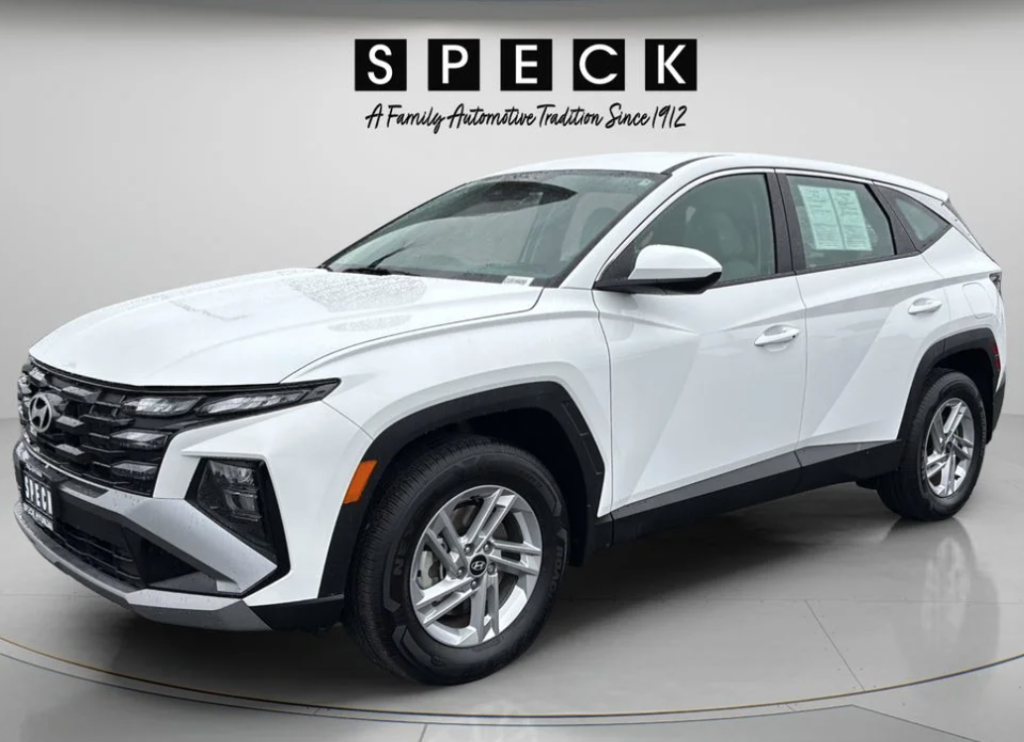
The Tucson has earned a strong reputation for long-term reliability. Models from 2020 onward feature stronger safety scores, fewer recalls, and better owner satisfaction ratings. With regular maintenance, many Tucson owners report reaching 150,000–200,000 miles without major issues.. That kind of longevity makes a used Tucson a solid investment, not just a short-term solution.
Reliable Engine
The 2.5L four-cylinder is smooth, efficient, and known for low failure rates. Hybrid and PHEV options are also available on newer model years.
Comfortable Interior
Spacious cabin, available leather seating, dual-zone climate control, and a hands-free power liftgate across mid and higher trims.
Tech & Safety
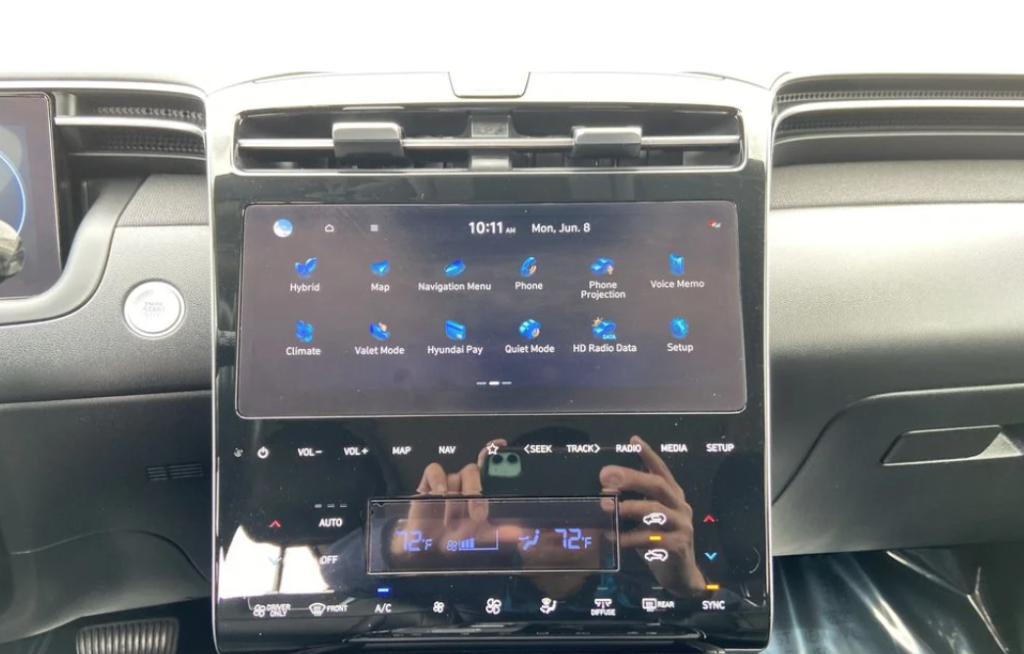
Apple CarPlay, a 10.25″ touchscreen, blind-spot monitoring, and Hyundai SmartSense safety features available across a wide range of model years.
AWD Available
All-wheel drive is available across most trim levels — a great option for Eastern Washington winters and varied terrain.
Benefits of Buying Used Instead of New
- Lower Purchase Price: A used Tucson can cost significantly less than a new one, often giving you access to a higher trim level or more features for the same budget. New vehicles can lose 15–20% of their value in the first year alone when you buy used, someone else absorbs that depreciation hit.
- Lower Insurance & Registration Costs: Used vehicles typically cost less to insure and register than their brand-new counterparts. Over the course of ownership, those savings add up in a meaningful way making the used Tucson an even smarter financial choice for budget-conscious Tri-Cities buyers.
Looking for a used Hyundai Tucson dealership in the Tri-Cities?
Our used Hyundai inventory rotates regularly, so new options are always arriving. Browse our current selection online or stop by and our team will help you find the right Tucson at the right price, and our finance team works with a range of lenders to fit every budget.
Whether you’re after a fuel-efficient commuter, a family-friendly all-wheel-drive SUV, or simply a dependable vehicle at a fair price, the used Hyundai Tucson delivers. Visit your local used Hyundai Tucson dealership in the Tri-Cities and let us help you find the one that’s right for you.
The information provided is for general informational purposes only and does not constitute legal, financial, or professional advice. While we strive to provide accurate and up-to-date information, we make no guarantees regarding the completeness, accuracy, or reliability of the information presented. Any action you take based on the context of this blog is strictly at your own risk. Always consult a qualified professional or specialist for advice specific to your situation. We are not responsible for any losses or damages arising from the use of this blog or its content.
2026 Hyundai Kona Price in the Tri-Cities, WA

If you’ve been searching for the Hyundai Kona price in the Tri-Cities, WA, you’re in the right place. The 2026 Hyundai Kona arrives with a refreshed and simplified trim lineup, two engine options, and a starting Hyundai Kona MSRP of just $25,500, making it one of the most accessible and well-equipped compact SUVs on the market. Whether you’re a first-time buyer or upgrading from an older vehicle, here’s a full breakdown of every trim, its price, and what you get.
What’s New for 2026 Hyundai Kona?
For 2026, Hyundai streamlined the Kona lineup by dropping the SEL, SEL Convenience, N Line S, and N Line trims. In their place are two new grades: the SEL Sport and SEL Premium. The result is a cleaner, easier-to-choose lineup with four well-defined tiers. Every 2026 Kona also comes standard with Hyundai SmartSense safety technology and a 12.3″ digital gauge cluster, features that would cost extra on competing models.
2026 Hyundai Kona Trim Levels & Starting MSRP
New 2026 Kona SE Starting MSRP from $25,500 (FWD) · $27,000 (AWD)
- 2.0L 4-cyl
- 147 HP
- CVT
- Entry-level
The most affordable way into the 2026 Kona and it comes better equipped than you’d expect. Standard features include a 12.3″ touchscreen with Apple CarPlay and Android Auto, the full Hyundai SmartSense safety suite (forward collision avoidance, lane keeping assist, blind-spot monitoring, rear cross-traffic alert), 17-inch alloy wheels, and LED headlights. A strong choice for budget-conscious buyers who still want modern technology.
New 2026 Kona SEL Sport Starting MSRP from $26,825 (FWD) · $28,325 (AWD)
- 2.0L 4-cyl
- 147 HP
- CVT
- Sport styling
New for 2026, the SEL Sport adds a sporty edge to the value-focused SE. Upgrades include 18-inch alloy wheels, proximity key with push-button start, heated front seats, wireless device charging, gloss-black exterior styling accents, and roof rails. A great middle-ground for buyers who want everyday practicality with a little extra personality.
New 2026 Kona SEL Premium Starting MSRP From $28,425 (FWD) · $29,925 (AWD)
- 1.6L Turbo 4-cyl
- 190 HP
- 8-speed Auto
- Turbocharged engine
This is where the Kona makes a notable step up, the SEL Premium upgrades to the turbocharged 1.6L engine (190 HP, 195 lb-ft torque) and an 8-speed automatic transmission for a noticeably more spirited driving experience. It also adds H-Tex® seating surfaces, an 8-way power-adjustable driver’s seat, and 19-inch alloy wheels. The Edmunds editors recommend this trim as the sweet spot for most buyers.
New 2026 Kona Limited Starting MSRP From $34,920 (FWD) · AWD available
- 1.6L Turbo 4-cyl
- 190 HP
- 8-speed Auto
- Top of the lineup
The fully loaded Kona. The Limited adds heated and ventilated front seats, a leather-wrapped heated steering wheel, a premium Bose® sound system, a power panoramic sunroof, a hands-free smart liftgate, a 360-degree surround view monitor, and available ambient interior lighting. For drivers who want a premium SUV experience without a premium price tag, the Limited delivers everything.
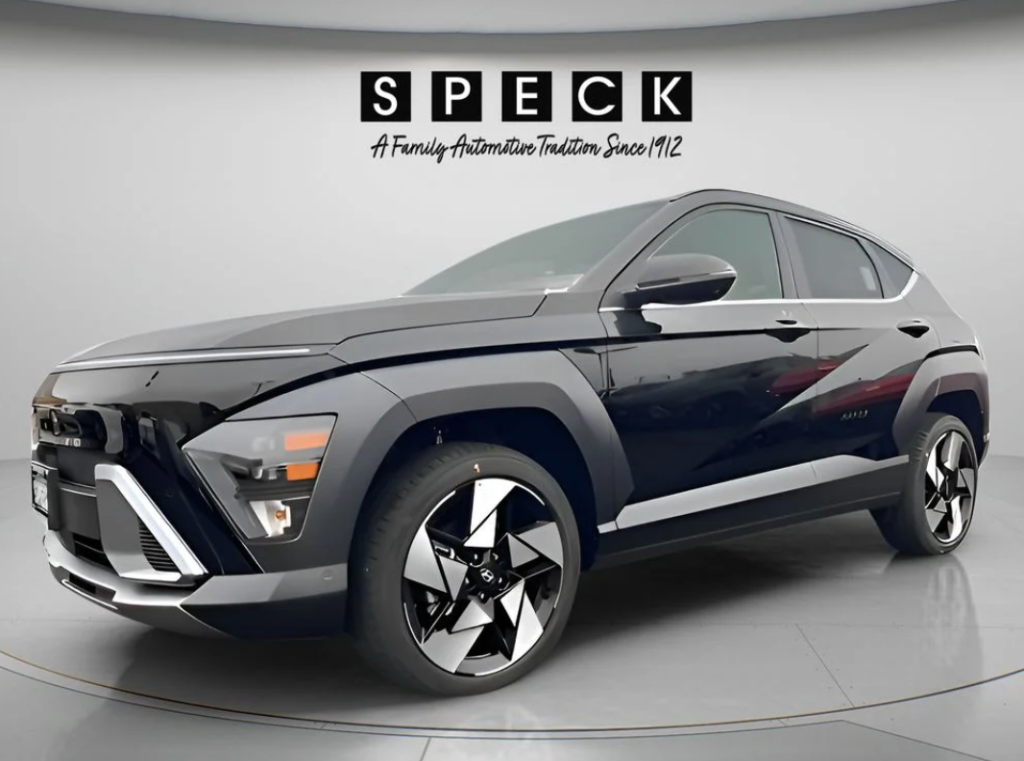
*MSRPs include destination charge and exclude taxes, title, and license fees. AWD pricing adds approximately $1,500 across trims. Contact our dealership for current in-stock pricing and available incentives.
Looking for the best Hyundai Kona MSRP deal in the Tri-Cities?
As your local Hyundai Kona dealer, we offer current new Hyundai offers including lease specials and low-APR financing on the Kona every month. Offers change regularly, so check our website or stop by to see what’s available right now for Kennewick, Richland, and Pasco area buyers.
Whether you’re drawn to the value of the SE or the turbocharged power of the SEL Premium and Limited, our team is here to help. Stop by or browse our current Hyundai Kona inventory online and let your local Hyundai Kona dealer in the Tri-Cities help you find the right trim at the right price.
The information provided is for general informational purposes only and does not constitute legal, financial, or professional advice. While we strive to provide accurate and up-to-date information, we make no guarantees regarding the completeness, accuracy, or reliability of the information presented. Any action you take based on the context of this blog is strictly at your own risk. Always consult a qualified professional or specialist for advice specific to your situation. We are not responsible for any losses or damages arising from the use of this blog or its content.

The Tri-Cities is a fantastic place to retire with over 300 days of sunshine, world-class wineries, great golf, and easy access to the Columbia River. Whether you’re exploring Hat Rock State Park or heading out on a road trip, having the right vehicle matters. For retirees looking for the best SUV, Hyundai SUVs consistently deliver comfort, fuel efficiency, and some of the strongest safety features for seniors in the industry.
Hyundai SUVs Ranked by Fuel Economy
- Tucson PHEV: 77 MPGe + 32 mi electric
- Tucson Hybrid with 1.6L Turbo Hybrid: 38 MPG
- Santa Fe Hybrid with 1.6L Turbo Hybrid: 35-36 MPG
- Venue with 1.6L Gas: 31 MPG
- Kona with 2.0L Gas: 30 MPG
- Tucson with 2.5L Gas: 29 MPG
- Santa Fe with 2.5 Turbo Gas: 23 MPG
- Palisade with 3.8L V6 Gas: 21-22 MPG
Flat Towing & Trailer Towing
Most modern Hyundai SUVs with automatic transmissions are not approved for flat towing (four-down behind a motorhome) due to drivetrain lubrication requirements always check your owner’s manual. A tow dolly is often the safer alternative. For pulling a boat, camper, or trailer:
- Palisade: Up to 5,000 lbs.
- Santa Fe: Up to 4,500 lbs.
- Tucson: Up to 2,000 lbs.
Hyundai Safety Features for Seniors
The Hyundai safety features suite, called SmartSense, comes standard across the lineup and not as a costly add-on. Key safety features for seniors include:
- Forward Collision-Avoidance Assist: auto-braking for vehicles, pedestrians, and cyclists
- Blind-Spot Collision-Avoidance Assist: alerts and corrective steering for unsafe lane changes
- Rear Cross-Traffic Collision-Avoidance Assist: warns and brakes when backing out of parking spaces
- Lane Keeping & Lane Following Assist: keeps you centered in your lane on the highway
- Smart Cruise Control with Stop & Go: adjusts speed and distance automatically in traffic
- Highway Driving Assist: semi-autonomous cruise and lane-centering for long drives on I-82 or I-84
- Driver Attention Warning: detects fatigue and prompts you to rest
- Safe Exit Assist: prevents doors from opening into oncoming traffic
BlueLink adds remote start, cabin pre-conditioning, door lock/unlock, vehicle tracking, maintenance alerts, and automatic SOS collision assistance, all from your phone, with no recurring subscription fee on 2024 and newer models.
For retirees in the Tri-Cities, the Tucson Hybrid and Santa Fe Hybrid are our top picks for fuel efficiency and comfort, while the Palisade is ideal for anyone needing extra space or towing muscle. Stop by and we’ll pair you with the right Hyundai SUV and walk you through our current new Hyundai offers.
The information provided is for general informational purposes only and does not constitute legal, financial, or professional advice. While we strive to provide accurate and up-to-date information, we make no guarantees regarding the completeness, accuracy, or reliability of the information presented. Any action you take based on the context of this blog is strictly at your own risk. Always consult a qualified professional or specialist for advice specific to your situation. We are not responsible for any losses or damages arising from the use of this blog or its content.

Shopping for a new Hyundai? Here’s a quick breakdown of the Hyundai offers and car specials available at our Tri-Cities dealership.
Lease Specials offer lower monthly payments with the flexibility to upgrade every few years. Hyundai financing promos feature competitive APR financing for buyers who want to own their vehicle. Cash rebates reduce the purchase price directly, regardless of how you pay.
What’s Open to Everyone vs. What Has Requirements
Some new Hyundai offers are already built into the advertised vehicle price. These apply to all customers, no eligibility needed. However, they cannot be combined with other offers.
You’ll also see a section for “Additional Available Hyundai Incentives,” which includes programs like the Military Appreciation Discount and the College Graduate Program. These offer extra savings but do come with eligibility requirements and documentation at time of purchase.
Shopping locally matters. The regional Hyundai offers on our website are specific to the Tri-Cities and Yakima area — not national averages or Seattle-market pricing. What you see is what’s available right here.
While our regional Hyundai offers usually can’t be combined with each other, they can be paired with an Additional Available Hyundai Incentive if you qualify. This means programs like the Military Appreciation Discount or College Graduate Program can be stacked for even greater savings. It’s worth checking whether you’re eligible before you buy, as it could make a meaningful difference in your final price.
Offers change monthly, so if you spot a Hyundai deal that works for your budget, don’t wait too long. Stop by the showroom or browse our current specials online — our team is happy to walk you through every option.
The information provided is for general informational purposes only and does not constitute legal, financial, or professional advice. While we strive to provide accurate and up-to-date information, we make no guarantees regarding the completeness, accuracy, or reliability of the information presented. Any action you take based on the context of this blog is strictly at your own risk. Always consult a qualified professional or specialist for advice specific to your situation. We are not responsible for any losses or damages arising from the use of this blog or its content.
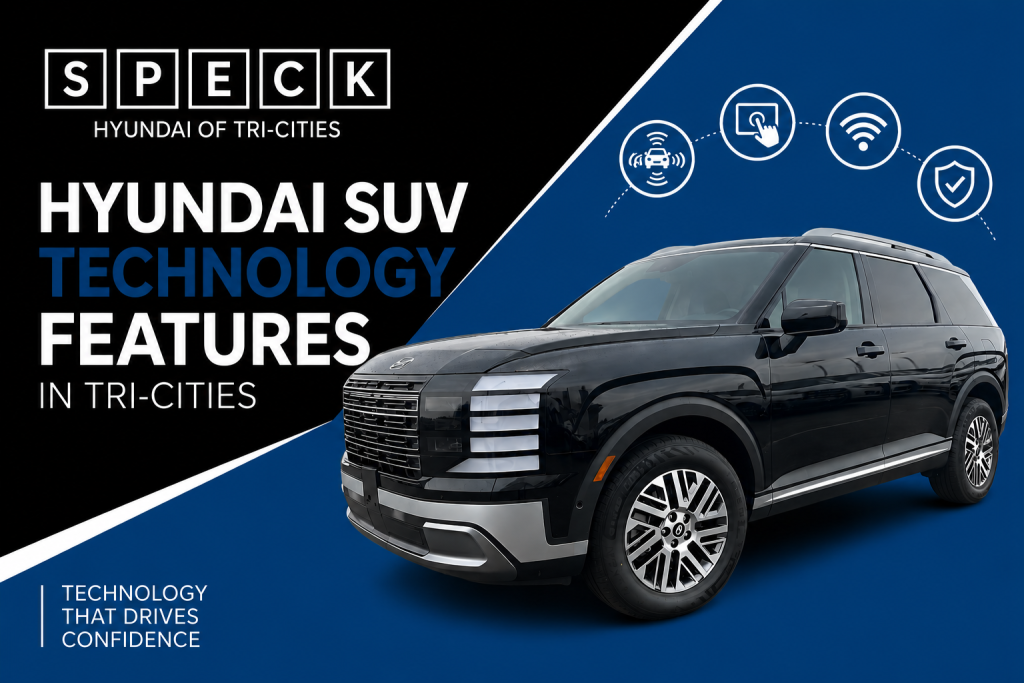
When it comes to Hyundai SUV technology, the brand punches well above its price point. From standard safety systems to premium infotainment and driver-assist features, the 2025 Hyundai SUV lineup is loaded with Hyundai tech that rivals vehicles costing significantly more. Whether you’re shopping for a compact daily driver or a fully loaded three-row family hauler, here’s a breakdown of the most popular tech features across the lineup — and which models they’re available on.
Popular Tech Features by Model
| Tech Feature | Available On |
|---|---|
| 12.3″ Dual Panoramic Display Curved widescreen combining infotainment + digital instrument cluster | Tucson Limited+ Santa Fe SEL+ Palisade SEL Premium+ |
| Blind-Spot View Monitor Projects blind-spot camera feed directly into the instrument cluster | Santa Fe Calligraphy Palisade Limited+ Tucson Limited |
| Head-Up Display (HUD) Projects speed, navigation & safety info onto the windshield | Palisade SEL Premium+ Santa Fe Limited+ Tucson Limited |
| Highway Driving Assist 2 (HDA 2) Semi-autonomous lane-centering, speed, and lane-change assist | Palisade Calligraphy Santa Fe Calligraphy Tucson Limited |
| 64-Color Ambient Interior Lighting Customizable cabin mood lighting throughout the interior | Palisade Limited+ Santa Fe Limited+ |
| Surround View Monitor (3D) 360° bird’s-eye camera view for parking | Palisade SEL Premium+ Santa Fe SEL+ Tucson Limited |
| Remote Smart Parking Assist (RSPA) Park or pull out of tight spaces from outside the vehicle | Palisade Calligraphy Santa Fe Calligraphy |
| Harman Kardon® Premium Audio 12-speaker premium sound system | Palisade Limited+ Santa Fe Limited+ |
| Wireless Apple CarPlay & Android Auto No cable required for smartphone integration | All 2025 Hyundai SUVs |
| BlueLink+ Connected Services Remote start, lock/unlock, SOS, vehicle tracking — no subscription fee | All 2025 Hyundai SUVs |
| Digital Rearview Mirror Live rear camera feed replaces the standard mirror for unobstructed visibility | Palisade Calligraphy Santa Fe Calligraphy |
| Ergo-Motion Driver Seat Massaging seat with multiple adjustable zones | Palisade Calligraphy Santa Fe Calligraphy |
The Top Tech-Heavy Trim: Calligraphy
If you’re truly looking for the absolute best tech package in the Hyundai SUV lineup, then look no further than the Calligraphy trim — available on both the Palisade and Santa Fe. This is the flagship configuration that brings together every piece of premium Hyundai tech the brand offers: the full dual panoramic display, Highway Driving Assist 2, Blind-Spot View Monitor in the instrument cluster, Remote Smart Parking Assist, digital rearview mirror, Ergo-Motion massaging driver seat, Harman Kardon® audio, and 64-color ambient lighting. It’s a luxury experience without the luxury price tag, and our team can’t say enough about it.
What do the Hyundai Experts have to Say?
“My favorite feature has to be the blind-spot monitor that shows up right in the instrument cluster. When you hit your turn signal, you see exactly what’s in your blind spot without taking your eyes off the road. It’s one of those things that once you have it, you can’t go back.”
— Jesus, Hyundai Sales Manager
“For me it’s the ambient lighting — it completely transforms the feel of the cabin at night. You can set it to 64 different colors and really personalize the vibe of the vehicle. Customers always light up when I show them that feature.”
— Lwis, Hyundai Sales & Leasing Professional
“The driver assist features are what really set Hyundai apart. Highway Driving Assist 2 especially — it keeps you centered in your lane, manages your following distance, and even helps with lane changes on the highway. It makes long drives so much more relaxed and safe.”
— Mo, Hyundai Sales & Leasing Professional
Whether you’re most excited about the Hyundai SUV technology packed into the Calligraphy or just want to know which features come standard on an SE, our team is here to walk you through every option. Stop by the showroom and we’ll let the tech speak for itself.
The information provided is for general informational purposes only and does not constitute legal, financial, or professional advice. While we strive to provide accurate and up-to-date information, we make no guarantees regarding the completeness, accuracy, or reliability of the information presented. Any action you take based on the context of this blog is strictly at your own risk. Always consult a qualified professional or specialist for advice specific to your situation. We are not responsible for any losses or damages arising from the use of this blog or its content.
Connect with us


Speck Hyundai of Tri-Cities

Address
2910 W Clearwater Ave
Kennewick, WA 99336
Phone
- Sales 509-715-0565
- Service 509-715-0714
- Parts 509-715-0736
| Monday | 9:00AM - 7:00PM |
| Tuesday | 9:00AM - 7:00PM |
| Wednesday | 9:00AM - 7:00PM |
| Thursday | 9:00AM - 7:00PM |
| Friday | 9:00AM - 7:00PM |
| Saturday | 9:00AM - 7:00PM |
| Sunday | 10:00AM - 6:00PM |
| Sales and Service will be closed 4th of July (07/04/2026) | |
| Monday | 7:30AM - 5:30PM |
| Tuesday | 7:30AM - 5:30PM |
| Wednesday | 7:30AM - 5:30PM |
| Thursday | 7:30AM - 5:30PM |
| Friday | 7:30AM - 5:30PM |
| Saturday | 9:00AM - 5:00PM |
| Sunday | Closed |
| We will be closed Sunday April 5th for Easter. | |
| Monday | 7:30AM - 5:30PM |
| Tuesday | 7:30AM - 5:30PM |
| Wednesday | 7:30AM - 5:30PM |
| Thursday | 7:30AM - 5:30PM |
| Friday | 7:30AM - 5:30PM |
| Saturday | 9:00AM - 5:00PM |
| Sunday | Closed |
| We will be closed Sunday April 5th for Easter. | |