


Used vs. Hyundai Certified Used
What’s the Difference between Used and Certified Used?
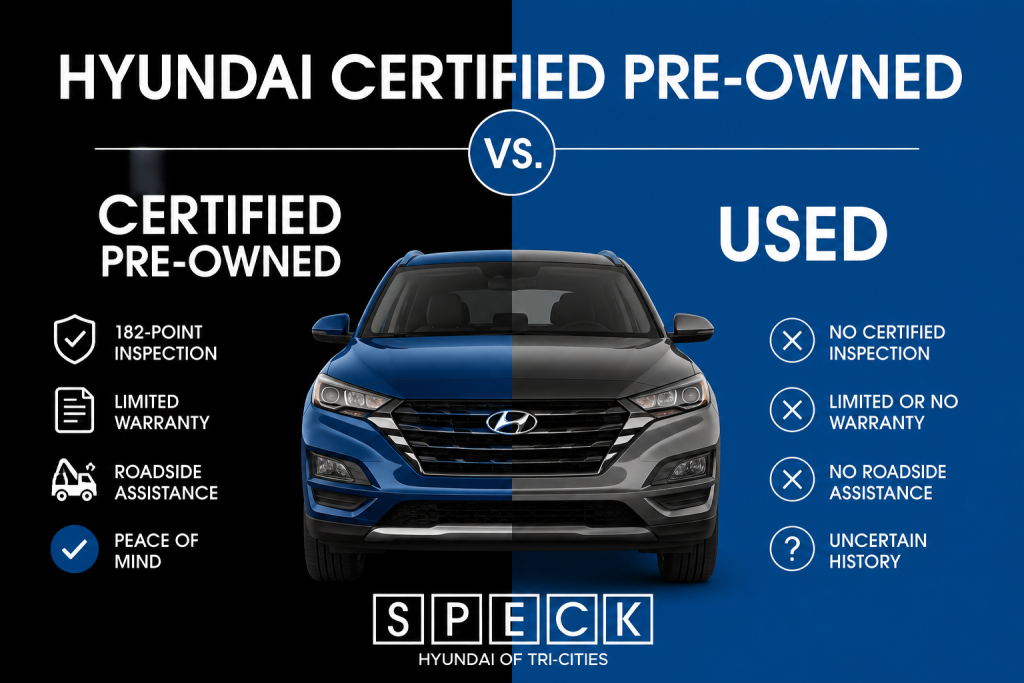
Not all used cars are created equal. A standard used vehicle comes with no manufacturer backing. What you see is what you get. A Hyundai Certified Pre-Owned (CPO) vehicle is a different story. It’s a used car held to a much higher standard.
How a Vehicle Earns CPO Status
Hyundai doesn’t certify just any used vehicle. To qualify, a vehicle must be no more than five years old. It must have fewer than 60,000 miles. Every CPO Hyundai passes a rigorous 173-point inspection performed by Hyundai trained technicians. Any part that doesn’t meet factory standards is repaired or replaced with genuine Hyundai parts. Vehicles that don’t pass don’t get certified.
The Warranty Advantage
This is where CPO really sets itself apart. Every certified Hyundai comes with the remainder of the 5-Year/60,000-Mile New Vehicle Limited Warranty. It also includes a reinstated 10-Year/100,000-Mile Powertrain Limited Warranty. A standard used car typically offers little to no warranty coverage. With CPO, you get manufacturer backed protection that gives you real peace of mind.
More Perks Included
The benefits don’t stop at the warranty. Every Hyundai CPO vehicle includes a complimentary CARFAX Vehicle History Report. You also get 10-Year/Unlimited-Mileage Roadside Assistance, available 24/7. That covers towing, jump starts, flat tire changes, lockout service, and fuel delivery. Rental car reimbursement of up to $35 per day is also available for covered repairs.
Test Drive a Certified Pre-Owned Hyundai Today
If you want used car value with new car confidence, CPO is the smart choice. At Speck Hyundai of Tri-Cities, we carry a selection of Hyundai Certified Pre-Owned vehicles ready for you to explore. Also, be sure to check out our large used inventory!
The information provided is for general informational purposes only and does not constitute legal, financial, or professional advice. While we strive to provide accurate and up-to-date information, we make no guarantees regarding the completeness, accuracy, or reliability of the information presented. Any action you take based on the context of this blog is strictly at your own risk. Always consult a qualified professional or specialist for advice specific to your situation. We are not responsible for any losses or damages arising from the use of this blog or its content.
How to find the VIN on a New Hyundai
What is a VIN and Why Does it Matter?
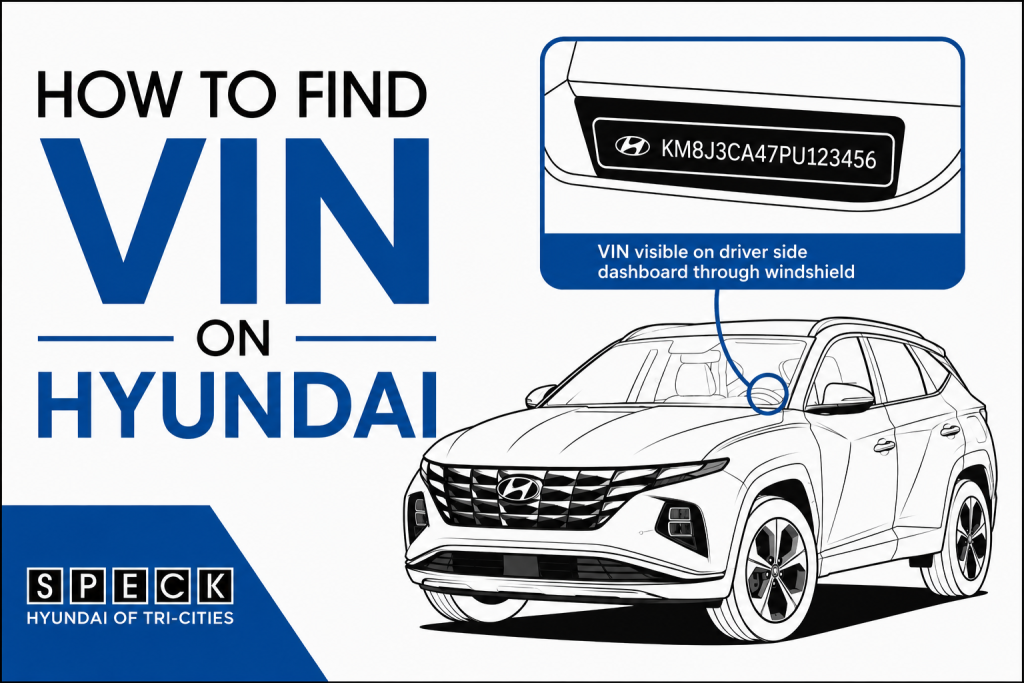
Your Vehicle Identification Number, or VIN, is a unique 17-character code that serves as your vehicle’s fingerprint. No two vehicles share the same VIN and it contains important information about your vehicle’s make, model, year and history.
Where to Find Your VIN on a Hyundai
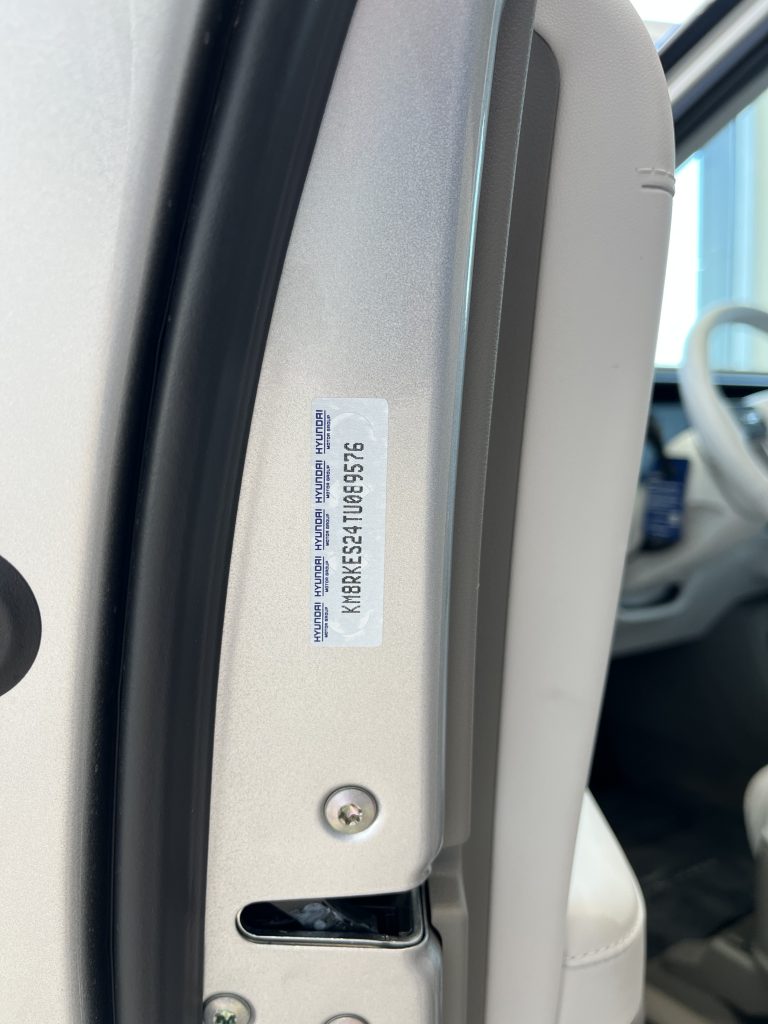
On most new Hyundai vehicles, the VIN can be found in a few easy places. The most common location is on the driver’s side dashboard, visible through the bottom corner of the windshield. You can also find it on the driver’s side door jamb on a small sticker, as well as on your vehicle’s title, registration and insurance documents.
When Will You Need Your VIN?
Your VIN comes in handy more often than you may think! From scheduling service appointments and ordering parts to checking your vehicle’s history and registering your warranty — having your VIN readily available makes the whole process quick and easy. Stop in and see our team at Speck Hyundai if you ever have any questions!
The information provided is for general informational purposes only and does not constitute legal, financial, or professional advice. While we strive to provide accurate and up-to-date information, we make no guarantees regarding the completeness, accuracy, or reliability of the information presented. Any action you take based on the context of this blog is strictly at your own risk. Always consult a qualified professional or specialist for advice specific to your situation. We are not responsible for any losses or damages arising from the use of this blog or its content.
How Often Do You Need New Tires?

Knowing when to replace your tires is one of the most important parts of vehicle ownership. Worn tires affect your safety, your fuel economy, and how your car handles on the road. At Speck Hyundai of Tri-Cities, our service team wants to help you stay ahead of tire wear before it becomes a problem.
Tires Don’t Last Forever
Most manufacturers recommend replacing tires every six years regardless of mileage. Some tires can last up to ten years with proper care and regular rotations. But age alone does not tell the whole story. How and where you drive plays a big role in how quickly your tires wear down.
Know Your Mileage Threshold
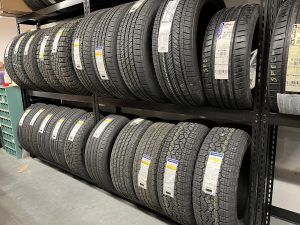
The general rule is to replace tires every 25,000 to 50,000 miles. City driving, frequent hard braking, and sharp cornering all wear tires down faster. Highway drivers typically get more life out of their tires. Checking your mileage regularly helps you stay ahead of replacement before tread becomes dangerously low.
Try the Penny Test
The penny test is one of the easiest ways to check your tire tread at home. Place a penny into the tread with Lincoln’s head facing down. If you can see the top of his head, your tread is too low. At that point, replacing your tires is a safety necessity, not just a recommendation.
Watch for These Warning Signs
Worn tread is not the only sign your tires need attention. Vibration while driving, pulling to one side, and visible cracking or bulging are all red flags. Do not wait for a blowout to take action. Addressing tire issues early keeps you and your passengers safe on every trip.
Visit Speck Hyundai of Tri-Cities
Our service team is here to inspect your tires and recommend the right next steps. Whether you need a rotation, an alignment, or a full set of new tires, we make the process easy. Stop by or schedule a service appointment with us today. Make sure to see if we have any available service specials!
The information provided is for general informational purposes only and does not constitute legal, financial, or professional advice. While we strive to provide accurate and up-to-date information, we make no guarantees regarding the completeness, accuracy, or reliability of the information presented. Any action you take based on the context of this blog is strictly at your own risk. Always consult a qualified professional or specialist for advice specific to your situation. We are not responsible for any losses or damages arising from the use of this blog or its content.
New 2026 Hyundai Santa Fe Trim Levels
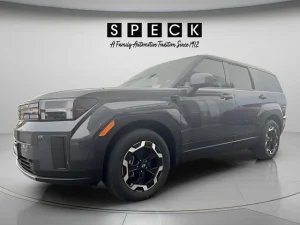
The 2026 Hyundai Santa Fe is a bold and capable midsize SUV available in five trim levels to suit every lifestyle and budget. Every gas-powered Santa Fe is powered by a 2.5-liter turbocharged four-cylinder engine producing 277 horsepower and 311 lb-ft of torque paired with an 8-speed automatic transmission. Metro Ford of OKC At Speck Hyundai of Tri-Cities, we are proud to carry the full Santa Fe lineup. Here is a breakdown of every trim level available for 2026.
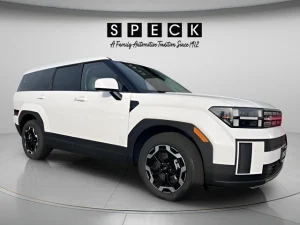
SE | Starting at $35,050
- Standard 12.3-inch color touchscreen with wireless Apple CarPlay and Android Auto
- Hands-free smart liftgate with auto open
- Standard forward collision avoidance, lane keep assist, and driver attention warning
SEL | Starting at $37,590
- Premium H-Tex seating surfaces and heated front seats
- Hyundai Digital Key 2 Premium for keyless entry via smartphone
- Power-adjustable driver’s seat and panoramic curved display
XRT | Starting at $42,040
- Bold black exterior accents, roof rails, and protective skid plates
- Maximum towing capacity of 4,500 pounds, the highest in the Santa Fe lineup
- Terrain Mode with settings for mud, snow, and sand added for 2026
Limited | Starting at $44,600
- 20-inch wheels, leather seating, ventilated front seats, and heated rear seats
- Surround-view camera system and dual wireless charging pads
- 12.3-inch digital gauge cluster and head-up display for a modern driving experience
Calligraphy | Starting at $47,600
- Stunning 21-inch alloy wheels and plush Nappa leather seating surfaces
- Driver’s seat with a relaxation function and full display rearview mirror
- Bose premium sound system for an immersive audio experience
Final Thoughts
Whether you are looking for an affordable entry point or the most loaded Santa Fe available, there is a trim level that fits your needs. Each step up the lineup adds meaningful features that make a real difference in everyday driving. Visit Speck Hyundai of Tri-Cities today to explore our 2026 Santa Fe inventory and find the perfect trim for you. Be sure to see if we have any deals available while you’re shopping
The information provided is for general informational purposes only and does not constitute legal, financial, or professional advice. While we strive to provide accurate and up-to-date information, we make no guarantees regarding the completeness, accuracy, or reliability of the information presented. Any action you take based on the context of this blog is strictly at your own risk. Always consult a qualified professional or specialist for advice specific to your situation. We are not responsible for any losses or damages arising from the use of this blog or its content.
Which Hyundai Models Have the Best Fuel Economy?
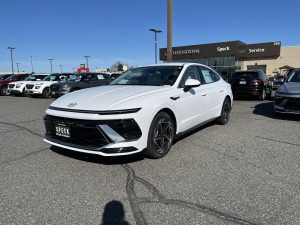
Hyundai has built one of the most fuel-efficient lineups in the automotive industry. From traditional gas models to hybrids, plug-in hybrids, and fully electric vehicles, there is an efficient Hyundai for every type of driver. At Speck Hyundai of Tri-Cities, we are proud to offer a wide selection of these fuel-saving models.

Gas Models Over 30 MPG
Several of Hyundai’s standard gas-powered models deliver impressive fuel economy right out of the box. The Elantra gas model earns an EPA-estimated 36 MPG combined, with up to 41 MPG on the highway. The Venue delivers a solid 31 MPG combined with 29 MPG city and 33 highway. The Kona also checks in at 31 MPG combined in its standard front-wheel-drive configuration. The Sonata SE gas model earns an EPA-estimated 32 MPG combined with 28 city and 38 highway. These models prove you do not need a hybrid to enjoy outstanding fuel savings at the pump.
Hybrid Models
Hyundai’s hybrid lineup takes fuel efficiency to an entirely new level. The Elantra Hybrid Blue trim is the standout of the entire lineup, earning an outstanding EPA-estimated 54 MPG combined with 51 city and 58 highway. The Sonata Hybrid Blue trim delivers an EPA-estimated 51 MPG combined with 47 city and 56 highway. The Tucson Hybrid earns an impressive 38 MPG combined, with AWD coming standard on all trims. The Santa Fe Hybrid steps up in the size while still delivering an EPA-estimated 36 MPG combined. These hybrids require no plugging in and deliver exceptional savings with every tank of gas.
Plug-In Hybrid Models (PHEV)
For drivers who want the option to drive on electricity for daily commutes while still having gas backup for longer trips, Hyundai’s PHEV models are an excellent choice. The Tucson Plug-In Hybrid offers an EPA-estimated 32 miles of electric-only range and averages around 35 MPG combined once the battery is depleted. The Santa Fe Plug-In Hybrid similarly offers electric-only drivers for short trips and impressive combined efficiency when running on gas. Both models can be charged at home overnight or at public charging stations, making them incredibly flexible for everyday use.
Electric Models
Hyundai’s all-electric IONIQ lineup delivers some of the best range figures in the industry. The IONIQ 5 starts at $35,000 and offers and EPA-estimated range of up to 303 miles on a single charge. The IONIQ 9 is Hyundai’s new three-row electric SUV starting at $58,955, offering up to 335 miles of range and seating for seven passengers. All IONIQ models support ultra-fast charging, getting the battery to 80 percent in as little as 24 minutes. For drivers ready to make the full switch to electric, the IONIQ lineup is one of the most compelling options on the market today.
Final Thoughts
Whether you are looking for a fuel-efficient gas model, a hybrid, a plug-in hybrid, or a fully electric vehicle, Hyundai has an option that fits your lifestyle and budget. The savings at the pump can be significant over time, making these models a smart long-term investment. Visit Speck Hyundai of Tri-Cities today to explore our full lineup and find the most efficient Hyundai for you.
The information provided is for general informational purposes only and does not constitute legal, financial, or professional advice. While we strive to provide accurate and up-to-date information, we make no guarantees regarding the completeness, accuracy, or reliability of the information presented. Any action you take based on the context of this blog is strictly at your own risk. Always consult a qualified professional or specialist for advice specific to your situation. We are not responsible for any losses or damages arising from the use of this blog or its content.
Spring Car Care Tips for Tri-Cities Drivers
As the seasons change and warmer weather arrives, it is the perfect time to give your vehicle some attention. Winter can be tough on your car, and spring is a great opportunity to make sure everything is in top shape. At Speck Hyundai of Tri-Cities, our service team is here to help you get your vehicle ready for the road ahead.
Tires and Brakes
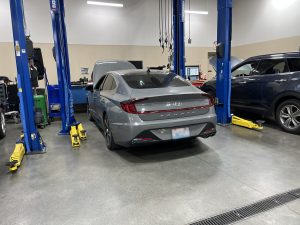
Cold weather and rough winter roads can take a serious toll on both your tires and brakes. Check your tire pressure, inspect tread depth, and look for any cracks or uneven wear that may have developed over the colder months. If you notice any squeaking, grinding, or a longer stopping distance, have your brakes inspected right away. Catching these issues early is one of the most important things you can do for your safety on the road.
Oil, Fluids, and Exterior
Spring is the perfect reminder to check all of your vehicle’s fluids. This includes engine oil, coolant, brake fluid, and windshield washer fluid. If you are due for an oil change, do not put it off any longer. It is also a great time to give your car a thorough wash, including the underside. Salt and road grime from winter can cause rust and corrosion if left untreated.
Final Thoughts
Taking care of your vehicle in the spring sets you up for a safe and reliable driving season. These simple steps can save you from costly repairs down the road. Schedule your spring service appointment with the team at Speck Hyundai of Tri-Cities today and let us help keep your vehicle in peak condition. Be sure to check what service specials we have available.
The information provided is for general informational purposes only and does not constitute legal, financial, or professional advice. While we strive to provide accurate and up-to-date information, we make no guarantees regarding the completeness, accuracy, or reliability of the information presented. Any action you take based on the context of this blog is strictly at your own risk. Always consult a qualified professional or specialist for advice specific to your situation. We are not responsible for any losses or damages arising from the use of this blog or its content.
Used Honda Dealer
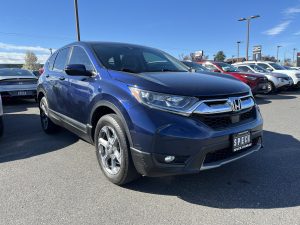
If you are in the market for a used Honda, Speck Hyundai of Tri-Cities is a great place to start your search. We carry a wide variety of pre-owned Honda models to fit every lifestyle and budget. From compact cars to spacious SUVs, our used inventory has something for every type of driver.
A Variety of Honda Models
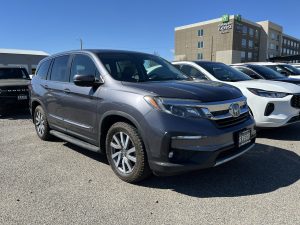
Our used Honda inventory includes a range of popular models like the Honda Pilot, Honda Accord, Honda CR-V, Honda Passport, and more. Each vehicle goes through a thorough inspection before it hits our lot. Whether you are looking for a fuel-efficient commuter or a family-friendly SUV, we likely have a Honda that fits your needs. Our team is happy to help you find the right match.
Inventory Changes Daily
One of the best benefits about shopping used is that new vehicles are always coming in. Our pre-owned inventory is updated daily, so there is always something fresh to explore. If you do not see exactly what you are looking for today, it may be on the lot tomorrow. We recommend checking our website regularly or giving us a call to stay up to date on our latest arrivals.
The Benefits of Buying Used
Buying a used vehicle comes with some significant advantages over purchasing new. The biggest benefit is the lower price point, as used vehicle are often thousands of dollars less that their new counterparts. You also avoid the steep depreciation that hits a new car the moment it leaves the lot. Insurance costs tend to be lower on used vehicles as well, making it a smart financial decision all around.
Final Thoughts
Choosing a used Honda is a smart way to get a reliable and well-built vehicle at a price that works for your budget. At Speck Hyundai of Tri-Cities, we are committed to making your used car buying experience easy and enjoyable. Stop by today to browse our current used Honda inventory and the rest of our used inventory. Be sure to check if we have any available specials as well. Let our team help you drive you home in the perfect vehicle.
The information provided is for general informational purposes only and does not constitute legal, financial, or professional advice. While we strive to provide accurate and up-to-date information, we make no guarantees regarding the completeness, accuracy, or reliability of the information presented. Any action you take based on the context of this blog is strictly at your own risk. Always consult a qualified professional or specialist for advice specific to your situation. We are not responsible for any losses or damages arising from the use of this blog or its content.
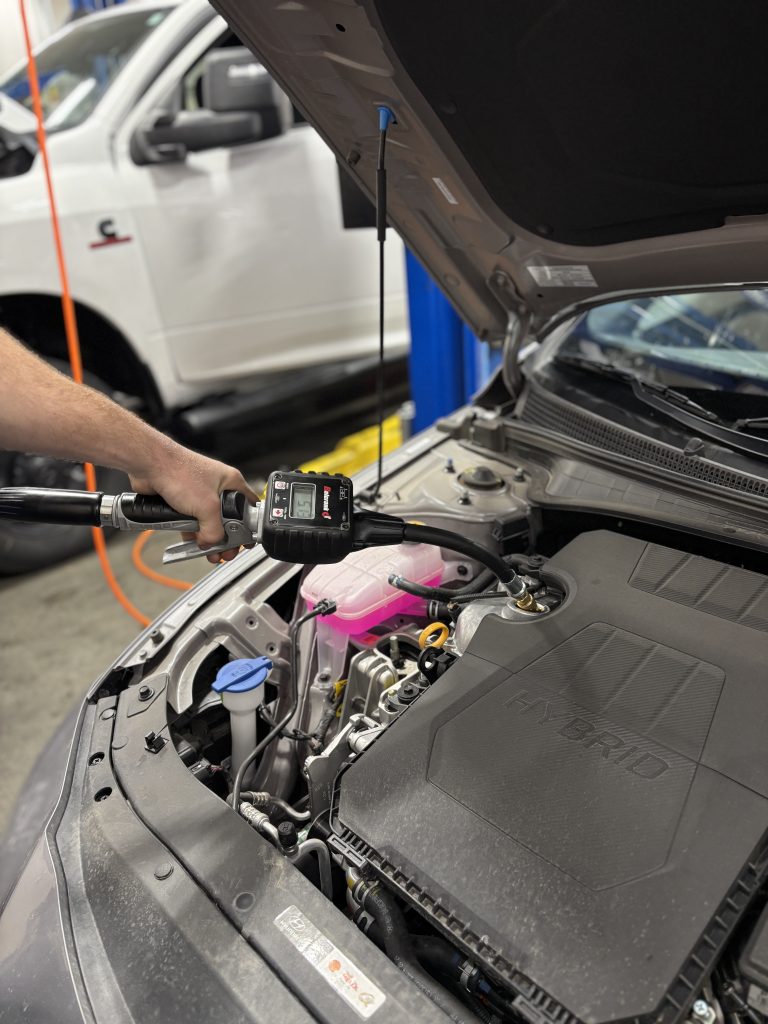
The Engine Oil Warning Light is one of the most important indicators on your dashboard. It typically appears as an oil can icon, sometimes displaying “OIL” or “OIL PRESSURE.” It can illuminate in red or yellow depending on the severity. If is comes on while driving, it could signal a serious issue with your engine’s lubrication system. Common causes include low oil level, low oil pressure, dirty or contaminated oil, an oil leak, and more. Understanding what triggers this light can save you from the costly repairs down the road.
What to do When the Light Comes On
If the light turns on while driving, pull over safely as soon as possible. Use the dipstick to check your oil level and look under the vehicle for any signs of leaking. If the oil level is low, add the manufactures recommended oil type for your vehicle. After adding oil, restart the engine and see if the light turns off. If the light stays on, do not continue driving. Contact a mechanic or roadside assistance right away.
How to Prevent Oil Issues
The best way to avoid this warning light is through regular maintenance. Follow your vehicles recommended oil change schedule and always use the correct oil type. Check your oil level periodically yo make sure it stays at the proper level. If you notice oil spots where you park, have your vehicle inspected immediately. Staying on top of these simple habits goes a long way in keeping your engine healthy and avoiding unexpected repairs.
Final Thoughts
We can help you with all of your engine oil warning light needs and more at Speck Hyundai of Tri-Cities. Be sure to check if we have any service specials currently available.
The information provided is for general informational purposes only and does not constitute legal, financial, or professional advice. While we strive to provide accurate and up-to-date information, we make no guarantees regarding the completeness, accuracy, or reliability of the information presented. Any action you take based on the context of this blog is strictly at your own risk. Always consult a qualified professional or specialist for advice specific to your situation. We are not responsible for any losses or damages arising from the use of this blog or its content.
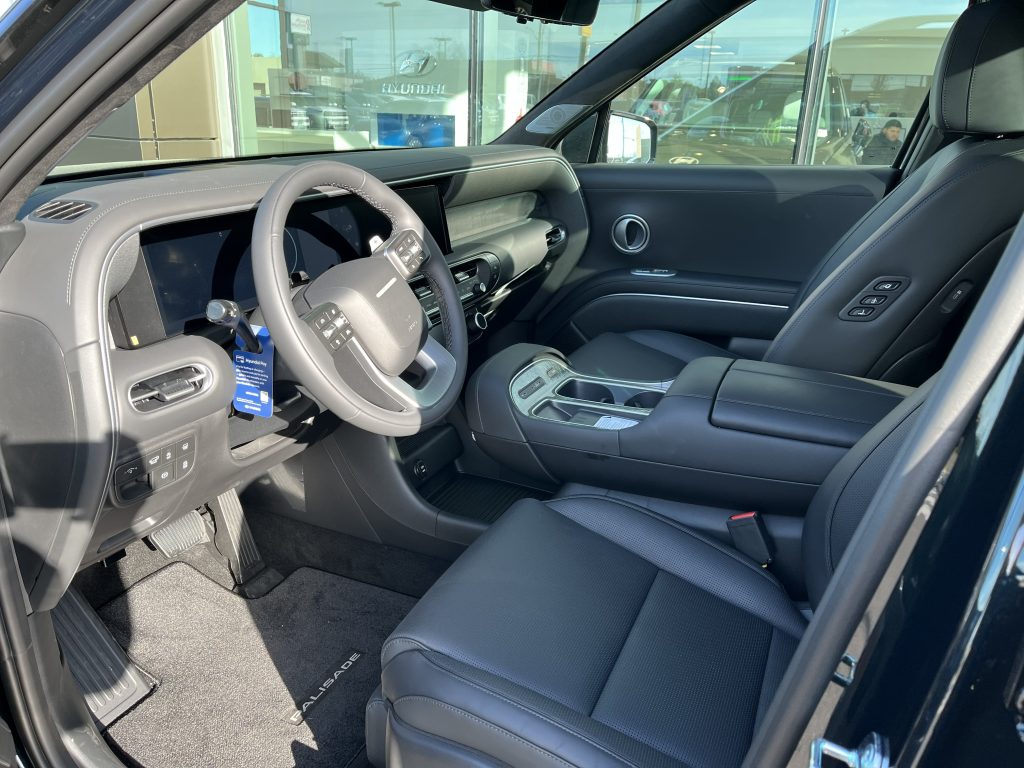
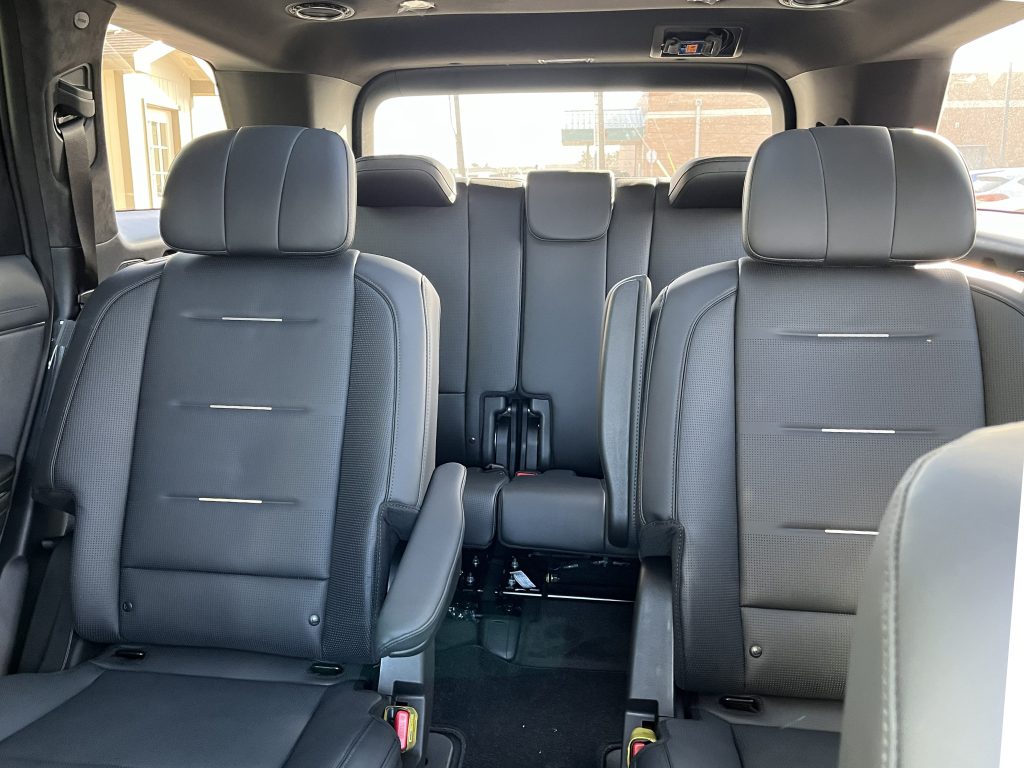
The 2026 Hyundai Palisade sets a new standard for luxury, comfort, and advanced technology in the SUV segment. Designed with families in mind, its interior is packed with high-end materials, smart features, and cutting-edge tech to enhance every drive. Here’s a closer look at the standout interior features of the new Palisade.
1. Premium Seating and Comfort
- Available Quilted Nappa Leather upholstery for a first-class experience
- Heated and ventilated front and second-row seats
- Power-adjustable driver and passenger seats with lumbar support
- Spacious three-row seating with available captain’s chairs
2. Advanced Technology and Connectivity
- 12.3-inch digital instrument cluster for a modern, high-tech display
- 12.3-inch touchscreen infotainment system with navigation
- Wireless Apple CarPlay® & Android Auto™ compatibility
- Wi-Fi hotspot for on-the-go connectivity
- Available HUD (Head-Up Display) for a seamless driving experience.
3. Convenience and Smart Features
- Hands-free smart liftgate for easy cargo access
- In-car intercom system to communicate with third-row passengers
- Quiet Mode to mute rear speakers while keeping the front speakers active
- Multiple USB-C charging ports throughout all three rows
4. Safety and Driver Assistance
- Hyundai SmartSense suite with advanced safety features
- Blind-Spot View Monitor for enhanced visibility
- Surround View Monitor for a 360-degree perspective
- Remote Smart Parking Assist to park with ease
Final Thoughts
The 2026 Hyundai Palisade continues to be a leader in the full-size SUV segment, offering a premium interior designed for comfort, convenience, and safety. Whether you’re looking for high-tech features or a spacious cabin for the whole family, the Palisade delivers on all fronts. Visit our dealership today to check out or inventory. Make sure to check our available specials and rebates!
The information provided is for general informational purposes only and does not constitute legal, financial, or professional advice. While we strive to provide accurate and up-to-date information, we make no guarantees regarding the completeness, accuracy, or reliability of the information presented. Any action you take based on the context of this blog is strictly at your own risk. Always consult a qualified professional or specialist for advice specific to your situation. We are not responsible for any losses or damages arising from the use of this blog or its content.
What to Know Before Leasing a Vehicle
Leasing a vehicle is a great option for those who want lower monthly payments and the ability to drive a new car every few years. However, before signing a lease, it’s important to understand the key aspects of leasing and how it differs from buying.
Key Considerations Before Leasing
1. Lease Terms & Mileage Limits
- Most leases last 24 to 36 months.
- Leases typically come with annual mileage limits (10,000-15,000 miles per year).
- Exceeding the mileage limit can result in extra fees per mile
2. Monthly Payments & Costs
- Leasing usually has lower monthly payments than financing.
- Be prepared for down payments, acquisition fees, and ,disposition fees.
- You’re responsible for maintenance and excess wear-and-tear charges.
3. End-of-Lease Options
- Return the vehicle and lease a new one.
- Purchase the leased vehicle if you want to keep it.
- Extend your lease if you need more time.
4. Insurance Requirements
- Leased vehicles often require higher coverage limits.
- GAP insurance may be required to cover potential depreciation gaps.
5. Customization & Restrictions
- Modifications to leased vehicles are usually not allowed.
- You must return the vehicle in good condition to avoid extra fees.
Final Thoughts
Come on over to Speck Hyundai of Tri-Cities, a top Hyundai dealer, and check out our large selection of new Hyundai’s available for lease. Be sure to ask if we have any specials or rebates available as well! Leasing can be a smart financial choice if you prefer lower payments and driving the latest models. Understanding the lease terms and potential costs will help you make an informed decision. Visit our dealership today to explore leasing options and find the perfect vehicle for you!
Connect with us


Speck Hyundai of Tri-Cities

Address
2910 W Clearwater Ave
Kennewick, WA 99336
Phone
- Sales 509-715-0565
- Service 509-715-0714
- Parts 509-715-0736
| Monday | 9:00AM - 7:00PM |
| Tuesday | 9:00AM - 7:00PM |
| Wednesday | 9:00AM - 7:00PM |
| Thursday | 9:00AM - 7:00PM |
| Friday | 9:00AM - 7:00PM |
| Saturday | 9:00AM - 7:00PM |
| Sunday | 10:00AM - 6:00PM |
| Sales and Service will be closed 4th of July (07/04/2026) | |
| Monday | 7:30AM - 5:30PM |
| Tuesday | 7:30AM - 5:30PM |
| Wednesday | 7:30AM - 5:30PM |
| Thursday | 7:30AM - 5:30PM |
| Friday | 7:30AM - 5:30PM |
| Saturday | 9:00AM - 5:00PM |
| Sunday | Closed |
| We will be closed Sunday April 5th for Easter. | |
| Monday | 7:30AM - 5:30PM |
| Tuesday | 7:30AM - 5:30PM |
| Wednesday | 7:30AM - 5:30PM |
| Thursday | 7:30AM - 5:30PM |
| Friday | 7:30AM - 5:30PM |
| Saturday | 9:00AM - 5:00PM |
| Sunday | Closed |
| We will be closed Sunday April 5th for Easter. | |