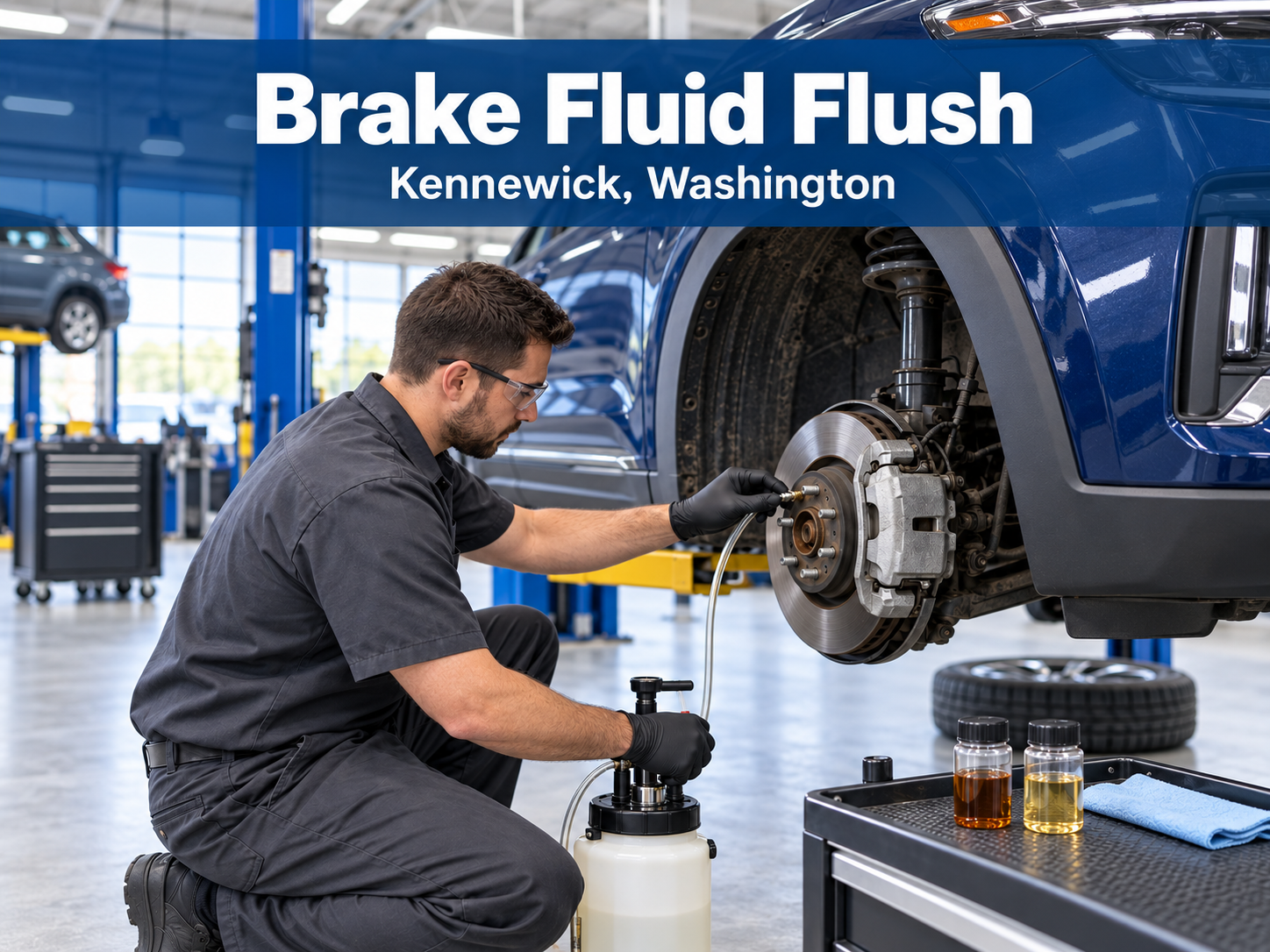
If you have never thought about your brake fluid before, you are not alone. Most drivers focus on oil changes and tire rotations but overlook one of the most critical fluid services available. A brake fluid flush is one of the most important and most overlooked maintenance services for any vehicle today. Here is everything Kennewick and Tri-Cities drivers need to know about brake fluid service and why it matters. What Is a Brake Fluid Flush? A brake fluid flush is a professional service that completely removes old brake fluid from your vehicle's braking system. Fresh, clean brake fluid is then added to replace the old fluid. It is also commonly called a brake fluid exchange or brake fluid replacement. The process ensures your braking system operates at peak performance and maximum safety at all times. Our Hyundai certified technicians at Speck Hyundai perform brake fluid service using Genuine Hyundai OEM approved brake fluid on every vehicle. Why Is Brake Fluid Important? Your brake fluid is the hydraulic fluid that transfers the force of your foot on the brake pedal to your brakes. Without clean and properly functioning brake fluid, your braking system cannot operate safely or effectively. Over time, brake fluid degrades and loses its ability to perform under extreme conditions. That is why regular brake fluid replacement is so important for every driver in the Kennewick and Tri-Cities area. Our Service Advisor Raul explains exactly why this matters: "Brake fluid is hygroscopic, meaning it naturally absorbs water from the air. When moisture builds up, the fluid boils at a much lower temperature during hard braking. Boiling fluid turns into a gas, leading to a dangerous loss of pedal pressure." — Raul, Service Advisor, Speck Hyundai Raul's explanation is important for every driver to understand. Degraded brake fluid can literally cost you your ability to stop your vehicle in an emergency. That is not a risk worth taking for any driver on the roads around Kennewick, Richland, and Pasco. Why Brake Fluid Flushes Matter for Tri-Cities Drivers Eastern Washington experiences some of the most extreme temperature swings in the Pacific Northwest. Kennewick and Tri-Cities drivers deal with scorching summer heat that regularly exceeds 100 degrees Fahrenheit. They also deal with cold winter temperatures that can drop well below freezing overnight. Those temperature extremes put significant additional stress on your vehicle's braking system every single day. Here is why temperature extremes make brake fluid service even more critical for Tri-Cities drivers: Extreme Summer Heat High summer temperatures increase the operating temperature of your braking system significantly. When brake fluid has absorbed moisture, its boiling point drops dramatically. That means brake fluid that is already compromised by moisture is even more dangerous during Eastern Washington's intense summer heat. A fresh brake fluid flush restores your fluid's boiling point to its original specification and keeps your brakes performing safely in the hottest conditions. Mountain Pass and Hill Driving Tri-Cities drivers frequently travel through mountain passes and hilly terrain on routes like US-12 and Highway 14. Long downhill stretches put sustained and intense heat into your braking system. Degraded brake fluid with a lower boiling point is especially dangerous on long downhill grades. Fresh brake fluid from a professional brake fluid exchange ensures your brakes can handle the demands of Eastern Washington's varied terrain. Cold Winter Temperatures Cold temperatures cause brake fluid to thicken and become less effective at transferring hydraulic pressure through the braking system. Degraded brake fluid with high moisture content is especially susceptible to performance issues in cold weather. A fresh brake fluid replacement ensures your brakes respond quickly and reliably even on the coldest winter mornings in Kennewick. Stop and Go Traffic Kennewick, Richland, and Pasco drivers deal with significant stop and go traffic during peak commute hours. Frequent braking generates significant heat in your braking system over time. That heat accelerates the breakdown of brake fluid and increases the rate at which it absorbs moisture. Regular brake fluid service keeps your braking system performing safely under the demands of daily Tri-Cities commuting. How Often Does Hyundai Recommend a Brake Fluid Flush? Hyundai recommends inspecting your brake fluid condition at every scheduled maintenance interval. Here is the general recommendation for brake fluid replacement based on Hyundai's maintenance guidelines: Hyundai recommends a brake fluid flush every 2 years or 30,000 miles for most models Always check your specific vehicle's owner's manual for the exact recommended interval Brake fluid should also be inspected any time you notice changes in brake pedal feel or performance Our service team at Speck Hyundai will check your brake fluid condition during every multi-point inspection visit If your brake fluid appears dark or discolored, it is almost certainly time for a brake fluid exchange Keep in mind that driving conditions affect how quickly brake fluid degrades. Eastern Washington's extreme temperatures and demanding terrain can accelerate brake fluid breakdown beyond the standard recommended interval. Signs Your Brake Fluid Needs to Be Replaced Watch for these warning signs that your vehicle may need a brake fluid flush: Spongy or soft brake pedal feel when you press the brake pedal Brake pedal sinking closer to the floor than normal during braking Dark, brown, or discolored brake fluid visible in the reservoir under the hood Longer stopping distances than you are used to experiencing A burning smell coming from your brakes after driving in hilly terrain Brake warning light illuminated on your dashboard If you notice any of these warning signs, schedule a brake fluid service appointment at Speck Hyundai in Kennewick right away. Do not wait on a brake issue. Your safety depends on it. What Does a Brake Fluid Flush Include at Speck Hyundai? Our brake fluid exchange service at Speck Hyundai includes a thorough and professional process performed by our Hyundai certified technicians. Here is what to expect: Complete removal of all old and degraded brake fluid from the entire braking system Thorough inspection of brake lines, hoses, and connections for leaks or damage Refilling the system with fresh Genuine Hyundai OEM approved brake fluid Brake pedal feel test to confirm proper system pressure and performance Digital inspection report sent directly to your phone or email Schedule Your Brake Fluid Flush in Kennewick Today Do not wait until you notice a problem with your brakes to schedule a brake fluid service. Our certified service team at Speck Hyundai in Kennewick is ready to help. Here is how to book your appointment: Online: Visit our website and click "Schedule Service" By Phone: Call our service department directly Walk-In: Stop by during service hours for same-day availability Your safety on Kennewick, Richland, and Pasco roads depends on a properly functioning braking system. Schedule your brake fluid flush at Speck Hyundai in Kennewick today and drive with confidence knowing your brakes are ready for whatever Eastern Washington throws at them. Schedule Service Online The information provided is for general informational purposes only and does not constitute legal, financial, or professional advice. While we strive to provide accurate and up-to-date information, we make no guarantees regarding the completeness, accuracy, or reliability of the information presented. Any action you take based on the context of this blog is strictly at your own risk. Always consult a qualified professional or specialist for advice specific to your situation. We are not responsible for any losses or damages arising from the use of this blog or its content.