
• Speck Hyundai of Tri-Cities

Blog / Automotive Service and Parts

Fall Car Care Tips for Tri-Cities, Washington Drivers

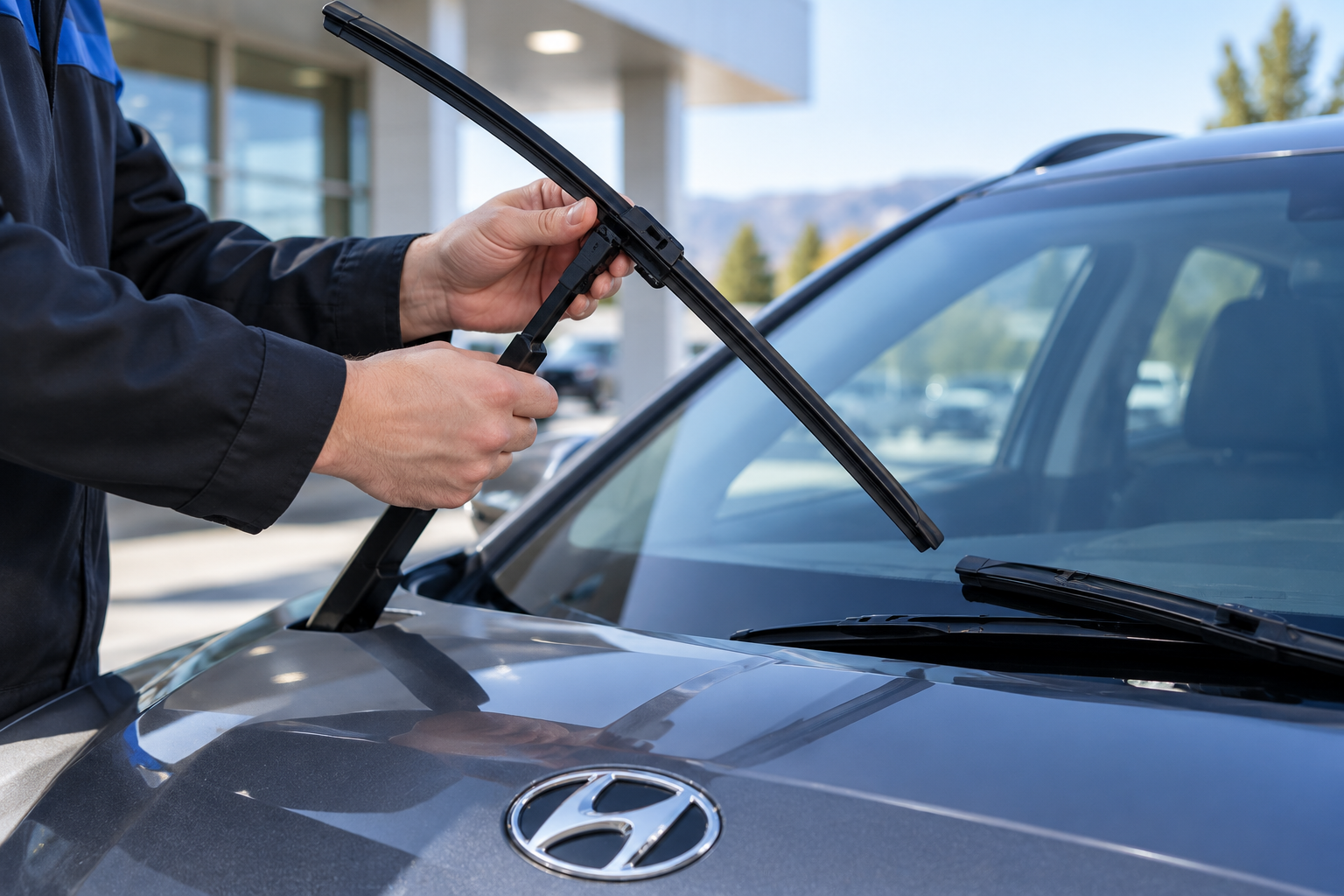
tech changing out a wiperblade

Fall is a beautiful time of year in the Tri-Cities and Yakima Valley. However, it also brings changing weather conditions that can affect your vehicle's safety and performance. Cooler temperatures, more rain, and shorter days all create new challenges for drivers across Kennewick, Richland, and Pasco. Here is your complete fall car service checklist and everything you need to know about fall vehicle maintenance at Speck Hyundai.

What Fall Weather Means for Tri-Cities Drivers

Eastern Washington fall weather can change quickly and dramatically. Rain arrives more frequently as summer gives way to fall across the Tri-Cities area. Daylight hours shorten significantly making visibility a critical safety concern for every driver. Early morning frost can appear on road surfaces before you even realize the temperature has dropped. All of these changes make fall car maintenance more important than ever for Tri-Cities Hyundai drivers.

Our Service Manager Jason puts it best:

"It's always a good idea to get your vehicle inspected for the changing conditions seasonally. Rain and possibly snow are around the corner. With our complimentary inspections we make sure that your vehicle is ready for the conditions to come."

— Jason, Service Manager, Speck Hyundai

Do not wait until conditions deteriorate before preparing your vehicle for fall and winter driving. A complimentary inspection at Speck Hyundai is the best place to start your fall vehicle maintenance this season.


Services Offered

Check Your Tires
Wet and slippery fall roads demand tires with adequate tread depth and proper inflation. Check your tire pressure when tires are cold as pressure drops approximately 1 PSI for every 10 degree temperature drop. Our service team can inspect all four tires and your spare during your next visit.

Inspect Your Brakes
Wet fall roads dramatically increase your stopping distance compared to dry summer roads. Squealing, grinding, or a soft brake pedal are all signs that your brakes need immediate attention. Our Hyundai maintenance tips for fall always start with a thorough brake inspection before the rainy season arrives.

Check Your Headlights and Taillights
Shorter fall days mean you will be driving in the dark significantly more than during summer. Dim or burned-out headlights dramatically reduce your visibility on wet and dark Tri-Cities roads. Check all exterior lights regularly and replace any burned-out bulbs immediately.

Inspect Your Wiper Blades
Worn or streaking wiper blades can severely compromise your visibility during heavy fall rain. Our Hyundai maintenance tips recommend replacing your wiper blades at the start of every fall season. Fresh wiper blades make an immediate and dramatic difference in visibility during fall rain showers.

Check Your Battery
Cold fall temperatures can significantly reduce your battery's ability to hold and deliver a charge. A battery that worked fine all summer may struggle or fail as temperatures drop this fall. Have your battery tested at Speck Hyundai before the cold weather arrives to avoid being stranded unexpectedly.

Check Your Coolant
Fall is the perfect time to check your coolant level and condition before temperatures drop significantly. Old or degraded coolant loses its ability to protect your engine from freezing temperatures. Our service team will check your coolant concentration and condition during your fall car service visit.

Check Your Cabin Air Filter
Fall brings increased pollen, leaves, and debris that can clog your cabin air filter faster than normal. A dirty cabin air filter makes it harder to keep your windows clear of condensation during wet fall mornings. Our service team recommends checking your cabin air filter during every fall car maintenance visit.

Top Off All Fluids
Fall is the perfect time to check and top off all of your vehicle's essential fluids. That includes engine oil, coolant, brake fluid, power steering fluid, and windshield washer fluid. Make sure your washer fluid is rated for cold temperatures as freezing washer fluid can damage your washer system.

Additional Fall Driving Tips for Tri-Cities Drivers

  • Allow extra stopping distance on wet roads as stopping distances increase significantly in the rain
  • Turn your headlights on whenever visibility is reduced including during rain and fog
  • Watch for wet leaves on road surfaces as they can be as slippery as ice when wet
  • Allow extra time for your windows to defog before driving on cold fall mornings
  • Watch for deer and wildlife that are more active near roadways during fall months

Schedule Your Fall Car Service at Speck Hyundai

Ready to get your vehicle fall ready at Speck Hyundai in Kennewick? Our certified Hyundai technicians are here to perform your complete fall car service checklist. Here is how to schedule your fall vehicle maintenance appointment today:

  • Online: Visit our website and click "Schedule Service"
  • By Phone: Call our service department directly
  • Walk-In: Stop by during service hours for same-day availability

Do not wait until the first cold rain or early frost catches you off guard. Schedule your fall car maintenance at Speck Hyundai in Kennewick today and drive with confidence all season long.

Schedule Automotive Service

The information provided is for general informational purposes only and does not constitute legal, financial, or professional advice. While we strive to provide accurate and up-to-date information, we make no guarantees regarding the completeness, accuracy, or reliability of the information presented. Any action you take based on the context of this blog is strictly at your own risk. Always consult a qualified professional or specialist for advice specific to your situation. We are not responsible for any losses or damages arising from the use of this blog or its content.
Posted in:

Related Posts

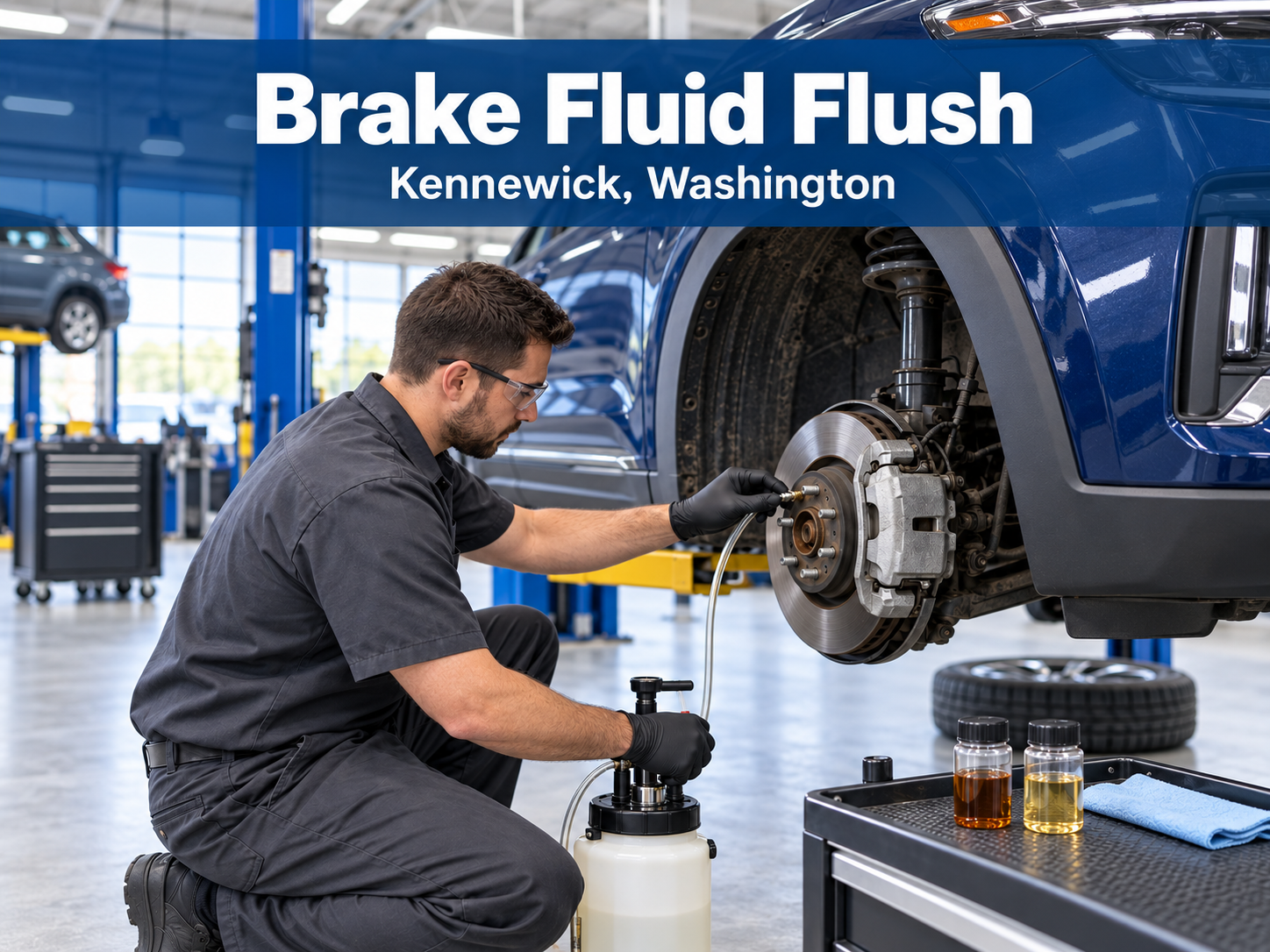
technician performing brake fluid flush

Brake Fluid Flush in Kennewick, Washington

If you have never thought about your brake fluid before, you are not alone. Most drivers focus on oil changes and tire rotations but overlook one of the most critical fluid services available. A brake fluid flush is one of the most important and most overlooked maintenance services for any vehicle today. Here is everything Kennewick and Tri-Cities drivers need to know about brake fluid service and why it matters. What Is a Brake Fluid Flush? A brake fluid flush is a professional service that completely removes old brake fluid from your vehicle's braking system. Fresh, clean brake fluid is then added to replace the old fluid. It is also commonly called a brake fluid exchange or brake fluid replacement. The process ensures your braking system operates at peak performance and maximum safety at all times. Our Hyundai certified technicians at Speck Hyundai perform brake fluid service using Genuine Hyundai OEM approved brake fluid on every vehicle. Why Is Brake Fluid Important? Your brake fluid is the hydraulic fluid that transfers the force of your foot on the brake pedal to your brakes. Without clean and properly functioning brake fluid, your braking system cannot operate safely or effectively. Over time, brake fluid degrades and loses its ability to perform under extreme conditions. That is why regular brake fluid replacement is so important for every driver in the Kennewick and Tri-Cities area. Our Service Advisor Raul explains exactly why this matters: "Brake fluid is hygroscopic, meaning it naturally absorbs water from the air. When moisture builds up, the fluid boils at a much lower temperature during hard braking. Boiling fluid turns into a gas, leading to a dangerous loss of pedal pressure." — Raul, Service Advisor, Speck Hyundai Raul's explanation is important for every driver to understand. Degraded brake fluid can literally cost you your ability to stop your vehicle in an emergency. That is not a risk worth taking for any driver on the roads around Kennewick, Richland, and Pasco. Why Brake Fluid Flushes Matter for Tri-Cities Drivers Eastern Washington experiences some of the most extreme temperature swings in the Pacific Northwest. Kennewick and Tri-Cities drivers deal with scorching summer heat that regularly exceeds 100 degrees Fahrenheit. They also deal with cold winter temperatures that can drop well below freezing overnight. Those temperature extremes put significant additional stress on your vehicle's braking system every single day. Here is why temperature extremes make brake fluid service even more critical for Tri-Cities drivers: Extreme Summer Heat High summer temperatures increase the operating temperature of your braking system significantly. When brake fluid has absorbed moisture, its boiling point drops dramatically. That means brake fluid that is already compromised by moisture is even more dangerous during Eastern Washington's intense summer heat. A fresh brake fluid flush restores your fluid's boiling point to its original specification and keeps your brakes performing safely in the hottest conditions. Mountain Pass and Hill Driving Tri-Cities drivers frequently travel through mountain passes and hilly terrain on routes like US-12 and Highway 14. Long downhill stretches put sustained and intense heat into your braking system. Degraded brake fluid with a lower boiling point is especially dangerous on long downhill grades. Fresh brake fluid from a professional brake fluid exchange ensures your brakes can handle the demands of Eastern Washington's varied terrain. Cold Winter Temperatures Cold temperatures cause brake fluid to thicken and become less effective at transferring hydraulic pressure through the braking system. Degraded brake fluid with high moisture content is especially susceptible to performance issues in cold weather. A fresh brake fluid replacement ensures your brakes respond quickly and reliably even on the coldest winter mornings in Kennewick. Stop and Go Traffic Kennewick, Richland, and Pasco drivers deal with significant stop and go traffic during peak commute hours. Frequent braking generates significant heat in your braking system over time. That heat accelerates the breakdown of brake fluid and increases the rate at which it absorbs moisture. Regular brake fluid service keeps your braking system performing safely under the demands of daily Tri-Cities commuting. How Often Does Hyundai Recommend a Brake Fluid Flush? Hyundai recommends inspecting your brake fluid condition at every scheduled maintenance interval. Here is the general recommendation for brake fluid replacement based on Hyundai's maintenance guidelines: Hyundai recommends a brake fluid flush every 2 years or 30,000 miles for most models Always check your specific vehicle's owner's manual for the exact recommended interval Brake fluid should also be inspected any time you notice changes in brake pedal feel or performance Our service team at Speck Hyundai will check your brake fluid condition during every multi-point inspection visit If your brake fluid appears dark or discolored, it is almost certainly time for a brake fluid exchange Keep in mind that driving conditions affect how quickly brake fluid degrades. Eastern Washington's extreme temperatures and demanding terrain can accelerate brake fluid breakdown beyond the standard recommended interval. Signs Your Brake Fluid Needs to Be Replaced Watch for these warning signs that your vehicle may need a brake fluid flush: Spongy or soft brake pedal feel when you press the brake pedal Brake pedal sinking closer to the floor than normal during braking Dark, brown, or discolored brake fluid visible in the reservoir under the hood Longer stopping distances than you are used to experiencing A burning smell coming from your brakes after driving in hilly terrain Brake warning light illuminated on your dashboard If you notice any of these warning signs, schedule a brake fluid service appointment at Speck Hyundai in Kennewick right away. Do not wait on a brake issue. Your safety depends on it. What Does a Brake Fluid Flush Include at Speck Hyundai? Our brake fluid exchange service at Speck Hyundai includes a thorough and professional process performed by our Hyundai certified technicians. Here is what to expect: Complete removal of all old and degraded brake fluid from the entire braking system Thorough inspection of brake lines, hoses, and connections for leaks or damage Refilling the system with fresh Genuine Hyundai OEM approved brake fluid Brake pedal feel test to confirm proper system pressure and performance Digital inspection report sent directly to your phone or email Schedule Your Brake Fluid Flush in Kennewick Today Do not wait until you notice a problem with your brakes to schedule a brake fluid service. Our certified service team at Speck Hyundai in Kennewick is ready to help. Here is how to book your appointment: Online: Visit our website and click "Schedule Service" By Phone: Call our service department directly Walk-In: Stop by during service hours for same-day availability Your safety on Kennewick, Richland, and Pasco roads depends on a properly functioning braking system. Schedule your brake fluid flush at Speck Hyundai in Kennewick today and drive with confidence knowing your brakes are ready for whatever Eastern Washington throws at them. Schedule Service Online The information provided is for general informational purposes only and does not constitute legal, financial, or professional advice. While we strive to provide accurate and up-to-date information, we make no guarantees regarding the completeness, accuracy, or reliability of the information presented. Any action you take based on the context of this blog is strictly at your own risk. Always consult a qualified professional or specialist for advice specific to your situation. We are not responsible for any losses or damages arising from the use of this blog or its content.
hyundai safety recalls

Hyundai Safety Recalls: What Tri-Cities Drivers Need to Know

If you own a Hyundai in the Tri-Cities area, staying on top of Hyundai safety recalls is one of the most important things you can do. A Hyundai recall can affect your vehicle's safety, performance, and reliability. Fortunately, checking for open recalls and getting them repaired is fast, free, and easy. Here is everything Kennewick and Tri-Cities drivers need to know about Hyundai recalls. What Is a Hyundai Safety Recall? A Hyundai safety recall is issued when a safety defect or non-compliance issue is identified in a vehicle. When a Hyundai recall is issued, Hyundai is required to notify all affected vehicle owners. Hyundai then provides a free repair at any authorized Hyundai dealership. Common recall areas include: Engine and powertrain components Airbags and supplemental restraint systems Brakes and brake components Electrical systems and software updates Steering and suspension components Who Pays for a Hyundai Recall Repair? Hyundai pays for every recall repair. You pay absolutely nothing out of pocket for a Hyundai safety recall repair. Our Service Manager Jason explains it best: "Safety recalls are important as they are issues that have been found that can directly relate to customer safety, environmental safety, and driving improvement. Hyundai pays for these to be performed." — Jason, Service Manager, Speck Hyundai A Hyundai recall is not something to ignore or put off. It is a free repair that exists specifically to protect you, your passengers, and other drivers on the road. How Do Hyundai Safety Recalls Affect Kennewick Drivers? Kennewick drivers cover a lot of ground every day. An open Hyundai safety recall can affect your vehicle's ability to perform safely under everyday driving conditions. It can also affect your vehicle's performance on highway driving along I-182 and US-12. Many Kennewick drivers do not realize their vehicle has an open recall. Recall notices can get lost, go to old addresses, or simply be overlooked. That is exactly why performing a regular Hyundai recall check is so important for every Tri-Cities driver. How to Check for Open Hyundai Recalls Performing a Hyundai recall check is fast, free, and easy. Here are the best ways to check: Check by VIN at NHTSA.gov Go to nhtsa.gov and enter your Hyundai's 17-digit Vehicle Identification Number. Your VIN can be found on the driver's side dashboard or door jamb sticker. The database will show every open recall on your specific vehicle. Check at Hyundai's Official Website Visit hyundaiusa.com and navigate to the recall information section. Enter your VIN to see any open Hyundai safety recalls specific to your vehicle. Visit Speck Hyundai in Kennewick The easiest way to perform a Hyundai recall check is to visit Speck Hyundai. Our service team can pull up your vehicle's full recall history in just a few minutes. We will let you know exactly what open recalls exist and schedule the repair right away. What Happens During a Hyundai Recall Repair? You bring your Hyundai to Speck Hyundai in Kennewick. Our Hyundai certified technicians perform the required repair using Genuine Hyundai OEM parts at absolutely no cost to you. Most Hyundai service recall repairs are completed in just a few hours. Schedule Your Hyundai Recall Check Today Do not wait to check for open Hyundai safety recalls on your vehicle. Here is how to schedule your Hyundai recall check today: Online: Visit our website and click "Schedule Service" By Phone: Call our service department directly Walk-In: Stop by during service hours for a same-day recall check Every Hyundai service recall repair at Speck Hyundai is completed at absolutely no cost to you. Do not put off an open recall. Schedule your Hyundai recall check at Speck Hyundai in Kennewick today. Check for Hyundai Recall

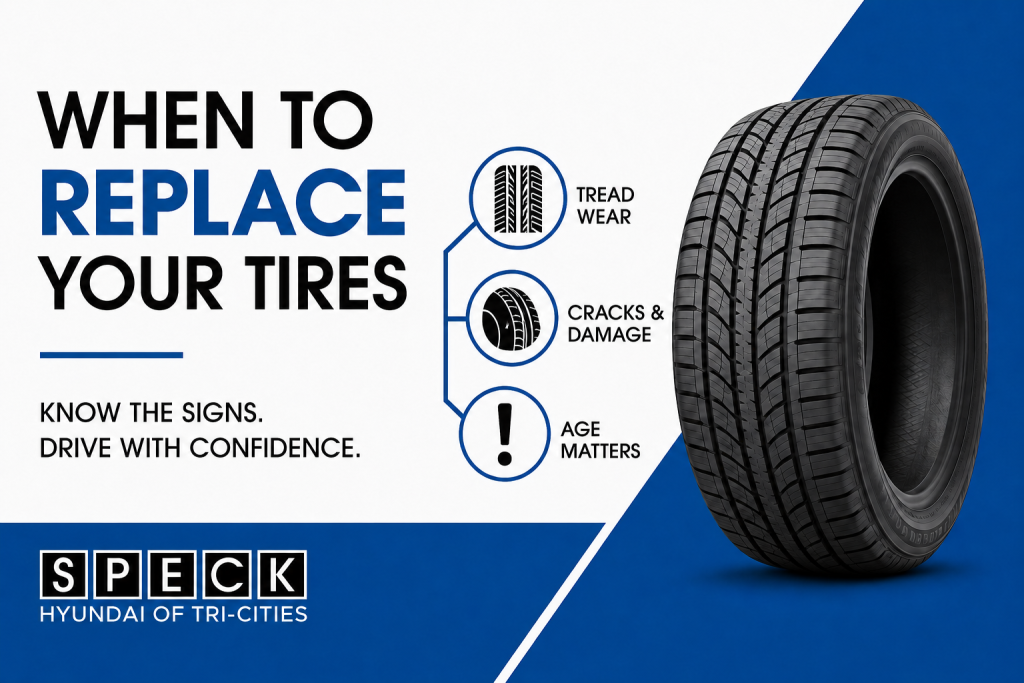
when to replace your tires blog post

How Often Do You Need New Tires?

Knowing when to replace your tires is one of the most important parts of vehicle ownership. Worn tires affect your safety, your fuel economy, and how your car handles on the road. At Speck Hyundai of Tri-Cities, our service team wants to help you stay ahead of tire wear before it becomes a problem. Tires Don't Last Forever Most manufacturers recommend replacing tires every six years regardless of mileage. Some tires can last up to ten years with proper care and regular rotations. But age alone does not tell the whole story. How and where you drive plays a big role in how quickly your tires wear down. Know Your Mileage Threshold The general rule is to replace tires every 25,000 to 50,000 miles. City driving, frequent hard braking, and sharp cornering all wear tires down faster. Highway drivers typically get more life out of their tires. Checking your mileage regularly helps you stay ahead of replacement before tread becomes dangerously low. Try the Penny Test The penny test is one of the easiest ways to check your tire tread at home. Place a penny into the tread with Lincoln's head facing down. If you can see the top of his head, your tread is too low. At that point, replacing your tires is a safety necessity, not just a recommendation. Watch for These Warning Signs Worn tread is not the only sign your tires need attention. Vibration while driving, pulling to one side, and visible cracking or bulging are all red flags. Do not wait for a blowout to take action. Addressing tire issues early keeps you and your passengers safe on every trip. Visit Speck Hyundai of Tri-Cities Our service team is here to inspect your tires and recommend the right next steps. Whether you need a rotation, an alignment, or a full set of new tires, we make the process easy. Stop by or schedule a service appointment with us today. Make sure to see if we have any available service specials! Schedule Service The information provided is for general informational purposes only and does not constitute legal, financial, or professional advice. While we strive to provide accurate and up-to-date information, we make no guarantees regarding the completeness, accuracy, or reliability of the information presented. Any action you take based on the context of this blog is strictly at your own risk. Always consult a qualified professional or specialist for advice specific to your situation. We are not responsible for any losses or damages arising from the use of this blog or its content.